

TL;DR
Debt consolidation generally means replacing or combining multiple debts with a new repayment arrangement. A single payment may simplify administration, but it does not by itself reduce the amount owed or assure a lower total cost. Whether it changes the total cost, payment, access to credit, or credit reporting depends on the actual agreement, fees, eligibility, and local rules.
The useful question is whether you can compare the full old and proposed repayment paths without relying on a headline rate or sales promise.
Key Takeaways
- Debt consolidation changes the structure of repayment; it is not debt forgiveness.
- A consolidation loan and a balance-transfer card can both combine balances, but their terms and risks can differ materially.
- Debt settlement and a debt management plan are separate approaches, with different parties involved and different treatment of what is owed.
- Compare total repayment cost, fees, repayment length, payment timing, and what happens to the accounts you already have—not just one monthly figure.
- If a proposal involves property as collateral, insolvency, a mortgage application, or a claim about credit effects, pause for country-specific professional or regulator-backed information.
What is debt consolidation, and is it a good idea?
Debt consolidation restructures several balances into one repayment arrangement. Fewer payments do not erase the underlying obligation.
Whether it is a good idea depends on the agreement and the reader’s circumstances. A shorter repayment period could raise a required payment; a longer one could change the total amount repaid. Fees, missed-payment consequences, changing rates, and old-account rules may also matter.
“Lower monthly payment” may reflect a different interest cost, a longer term, or both. Compare terms rather than treating consolidation as automatically cheaper or easier.
How debt consolidation works: two common routes
The two routes readers often encounter are a consolidation loan and a balance-transfer card. Neither is automatically available or suitable, and the details below are categories rather than product recommendations.
| Route | What it may combine | How repayment is structured | Terms to read closely | Main question to ask |
|---|---|---|---|---|
| Consolidation loan | Multiple eligible balances may be paid using proceeds from one new loan | One loan payment over the stated term | Interest/APR, origination or other fees, repayment schedule, late-payment terms, whether collateral is required | What is the total amount I would repay from today through the final scheduled payment? |
| Balance-transfer card | Eligible card balances may be moved to another card | Payment is made to the receiving card under its agreement | Transfer fee, promotional-period conditions, ongoing rate, required payments, timing, and what happens after a promotion | Can I meet every condition and repay under the actual card terms—not an assumed offer? |
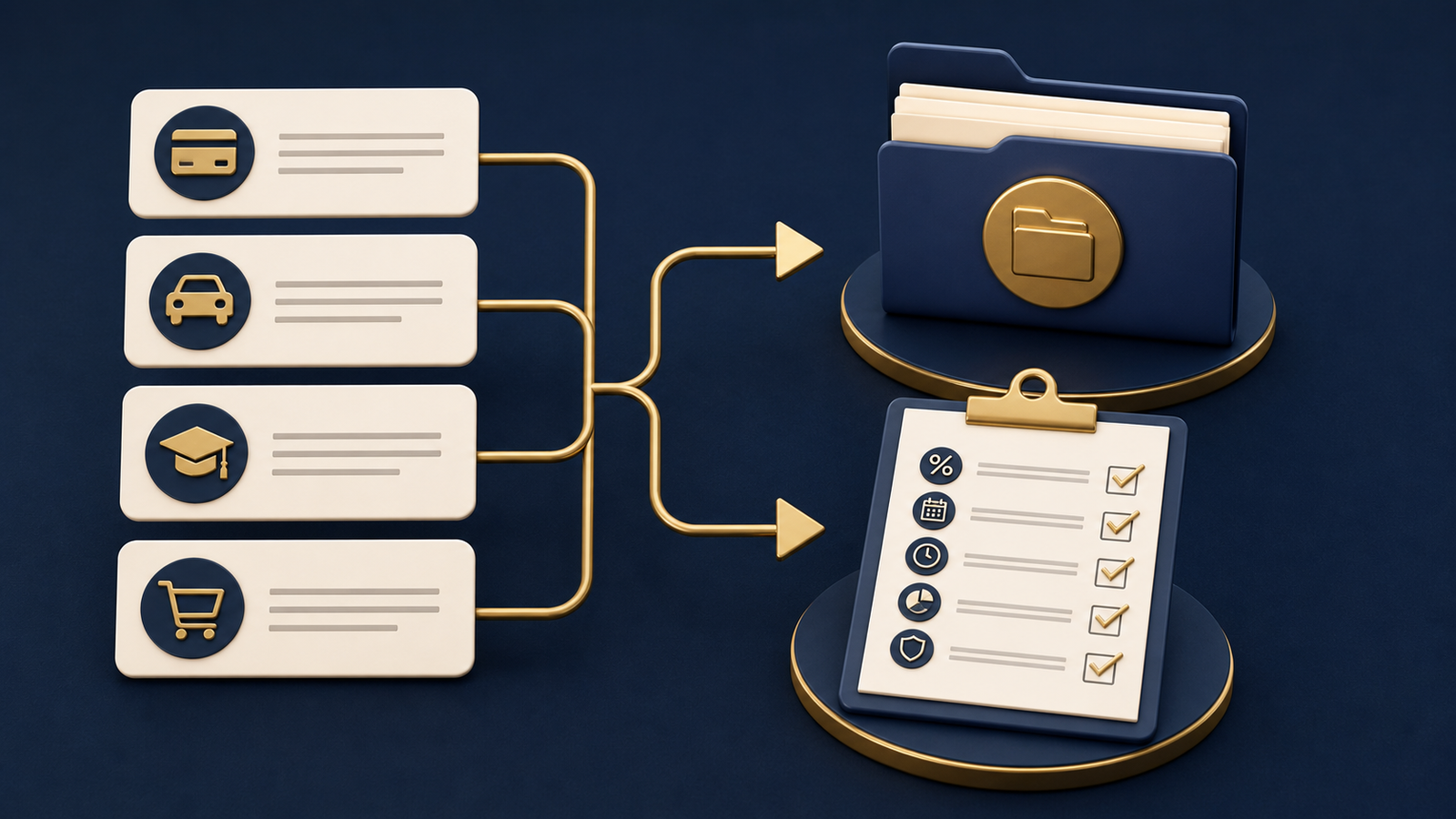
With a loan, read the repayment term, payment schedule, and fees. With a balance transfer, read eligible balances, transfer timing, fees, rate or promotional terms, and consequences of late or insufficient payments. Do not assume a transfer closes, leaves open, or changes an original account; confirm with each issuer.
Fictional illustration: three balances total $3,000. One proposal could have a lower payment because it runs longer; another could end sooner with a higher payment. This is not a typical rate, fee, approval, or savings outcome. It shows why the whole schedule matters.
For a plain-language explanation of card statements, interest, and balance-transfer terminology, see How Do Credit Cards Work?.
Debt consolidation vs debt settlement vs a debt management plan
These terms are frequently grouped together, but they describe different processes. Country-specific definitions, licensing, disclosure duties, and consumer protections can vary. The table is a map for questions to ask, not a substitute for a local regulator, nonprofit adviser, or qualified professional where appropriate.
| Approach | Who may be involved | Treatment of existing balance | Payment arrangement | Questions and cautions |
|---|---|---|---|---|
| Debt consolidation | A lender, card issuer, or another provider of a new repayment product | Existing balances may be transferred or paid off and replaced by a new balance | One new loan or card repayment path | What are the full costs, term, security/collateral terms, and account changes? |
| Debt settlement | The reader, creditors, and sometimes a settlement provider | A process may seek a negotiated reduction; a reduction is not guaranteed | Terms depend on any agreement reached | What fees, risks, creditor communication, and local legal effects apply? |
| Debt management plan | The reader, creditors, and sometimes a credit-counselling or plan provider | Balances are generally managed under a repayment arrangement rather than replaced by a new consolidation loan | Payments may be coordinated through a plan | Who administers it, which debts are covered, what fees apply, and what happens if a payment is missed? |

Ask a company to state in writing whether it is lending, arranging a transfer, negotiating with creditors, administering a plan, or charging for another service. Be cautious with pressure to sign or a guaranteed-result claim.
Debt consolidation pros and cons
A possible benefit can become a drawback when the contract or repayment behaviour changes.
| Possible advantage | Trade-off or risk to examine |
|---|---|
| Fewer payment due dates may simplify administration. | One missed payment can still have consequences under the new agreement. |
| A single statement may make the remaining balance easier to track. | A simpler statement does not prove a lower total repayment cost. |
| A different repayment schedule may create a clearer end date. | Extending the term can change the total repaid. |
| Some balances may be moved into one product. | Transfer, origination, annual, late, or other fees may apply. |
| Old cards might show a zero transferred balance. | New spending on old or new credit lines can create additional debt; account access and terms are issuer-specific. |
| A secured arrangement may offer a different structure. | Property or another asset used as collateral can create serious additional risk. |
Put the proposed agreement beside current statements. Include every known fee and scheduled payment; ask for unclear figures in writing before signing.
A decision checklist before you apply
- List each balance, due date, stated rate or APR, fees, and remaining term where shown.
- Record the proposal’s term, payment schedule, interest or APR, fees, and conditions that can change the cost.
- Compare total scheduled repayment under both paths. If unclear, request a written illustration or local professional help.
- Identify any collateral. If a home, vehicle, savings, or another asset is involved, seek appropriate local guidance.
- Ask what happens to old accounts after a transfer or payoff; do not assume closure, available credit, or future terms.
- Test the proposed payment against documented income and essential bills. Keep statements and disclosures; marketing is not the agreement.
Use The 50/30/20 Budget Rule as a general starting framework for mapping essential bills and debt payments.
Mortgage, bankruptcy, and bad-credit questions: keep the scope clear
Consolidation before a mortgage application, home-equity borrowing, insolvency or bankruptcy, or a bad-credit concern can involve country- and provider-specific lending, property, legal, and reporting issues. Use current local regulator, consumer-authority, insolvency-authority, or qualified-professional information before acting.
Consolidation is not the same as payoff order
Debt snowball and debt avalanche concern payoff order. Debt consolidation changes the repayment structure. They answer different questions; this guide does not prescribe a payoff method.
Compare payoff-order frameworks in Debt Snowball vs. Avalanche.
If a payment shock exposes a missing cash buffer, review How to Build an Emergency Fund in 90 Days.
Frequently Asked Questions
Does debt consolidation hurt your credit score?
It can involve applications, account changes, payment history, and reporting practices, but the effect depends on the country, credit-reporting system, lender, and the exact actions taken. Do not treat a general claim about a score increase or decrease as a guarantee. Confirm current information with the relevant credit bureau or consumer authority.
Is debt consolidation the same as debt settlement?
No. Consolidation generally restructures multiple balances into one repayment product or arrangement. Settlement is a separate process that may seek a negotiated reduction with creditors; outcomes, fees, and effects are not guaranteed and require local verification.
Is a balance-transfer card a form of debt consolidation?
A balance-transfer card can be one route for moving eligible card balances into one card account. It is not identical to a consolidation loan: its transfer rules, fees, payment requirements, and any promotional terms are card-specific.
Can debt consolidation reduce what I owe?
Consolidation itself does not erase the principal amount owed; it changes how debts are arranged and repaid. A separate settlement process may seek a reduction, but no reduction should be assumed or promised.
What should I compare before consolidating debt?
Compare the complete repayment schedule, interest/APR, every fee, term length, payment due dates, collateral, conditions affecting the cost, and treatment of old accounts. Keep the documents together and ask for unclear terms in writing.
Sources and further reading
- U.S. Federal Trade Commission: How To Get Out of Debt
- U.S. Federal Trade Commission: How To Recognize Scams To Lower Your Credit Card Interest Rate