

TL;DR
Cash stuffing is a way to make a spending plan visible: decide an amount for a category, set that cash aside, and track what leaves the envelope during a chosen period. It can be useful as an organizing routine, but it does not create income, erase debt, or guarantee savings. Start with variable spending categories and amounts from your own plan—not a universal formula.
Key Takeaways
- Cash stuffing, the cash envelope system, and envelope budgeting are three names commonly used for the same allocate-cash method.
- Start with categories where the amount can vary, such as groceries or personal spending, rather than trying to convert every bill to cash.
- Put a reader-entered planned amount on each envelope; the label is a recordkeeping tool, not a recommended spending limit.
- Record each withdrawal from the envelope so “cash on hand” does not become a mystery at the end of the week.
- A digital or hybrid version can separate category balances without carrying notes and coins; features and protections depend on the tool and provider.
What is cash stuffing?
Cash stuffing means allocating a pre-decided amount of cash to individual spending categories before you spend it. A person might label envelopes “groceries,” “transport,” and “fun,” then place the amount they chose for the period inside each one. When they pay cash from a category, they update the envelope or a tracker.
The point is visibility. Instead of seeing one undifferentiated bundle of cash, you can see which part of the plan was assigned to which job. It is simply one way to organize variable spending; it is not a universal solution. It is simply one way to organize variable spending.
A fictional example: Jordan plans a 14-day period and writes a reader-chosen amount of 80 units of local currency on a grocery envelope. After spending 23 units, Jordan records 57 units remaining. The example shows the subtraction, not a suggested grocery budget or a typical result.
For a general budgeting reference, consult the Consumer Financial Protection Bureau’s budgeting resources. The resource is U.S.-focused; use local guidance where rules or options differ.
Cash stuffing, cash envelope system, and envelope budgeting
The names can make this method sound more complicated than it is. Cash stuffing generally describes the same core sequence: decide, separate, spend, and review. “Digital envelopes” use separate balances or records instead of physical cash, so they are a variation on the allocation idea rather than an entirely different budgeting method.
| Name you may see | What it usually refers to | Practical meaning |
|---|---|---|
| Cash stuffing | A current, informal label | Putting planned cash amounts into categories |
| Cash envelope system | A longstanding label | Using labeled envelopes to hold category cash |
| Envelope budgeting | A general method name | Assigning money to categories before spending |
| Digital envelope | A hybrid or non-cash variation | Tracking separate category balances or pots |
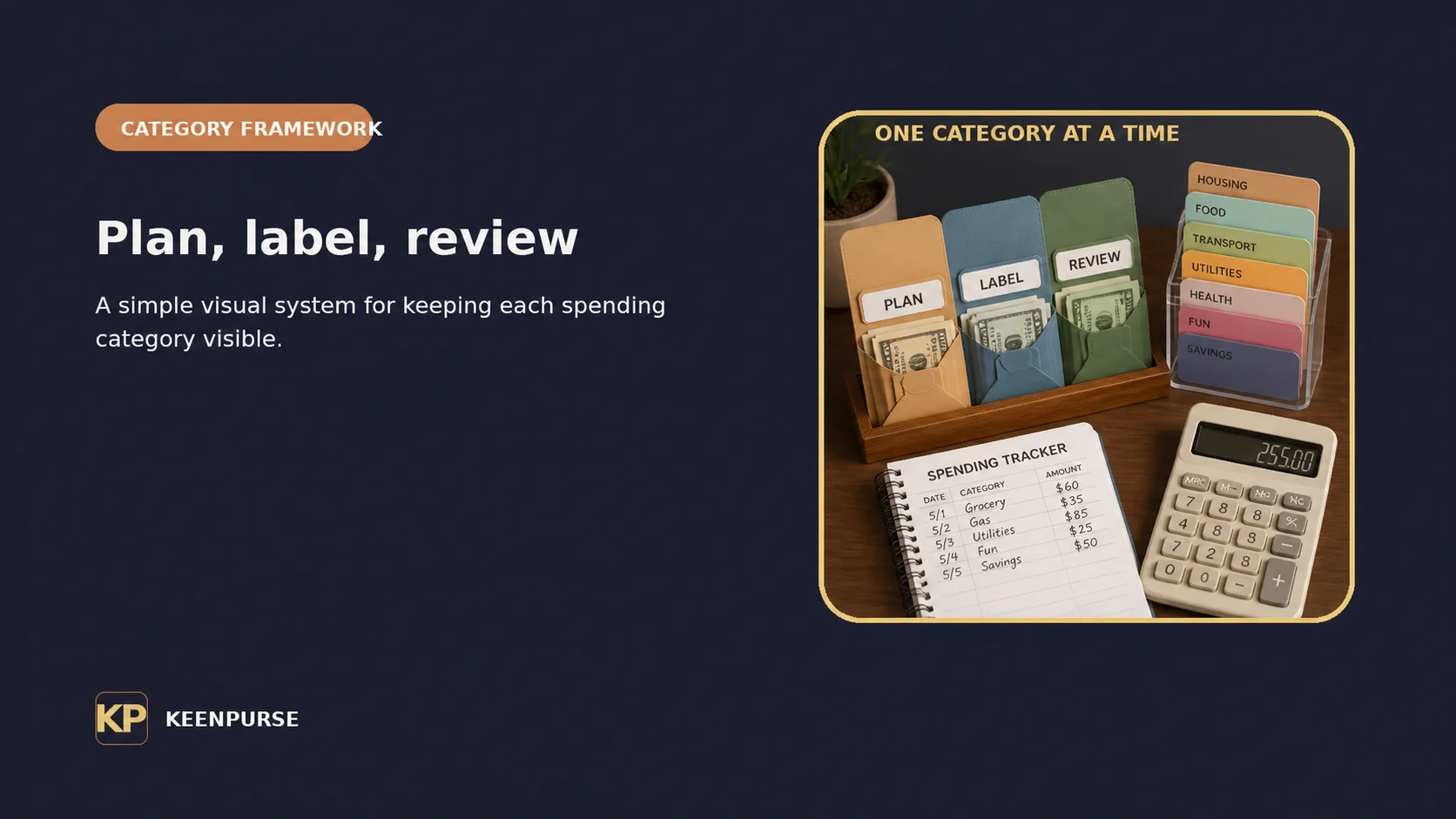
Avoid treating a binder, wallet, printable, or social-media trend as the method itself. The container is optional; the category plan and review habit do the work.
Choose categories before withdrawing cash
Choose categories first, then decide whether cash stuffing fits them. Variable categories are often easier to observe with envelopes because the amount may change from period to period. Fixed commitments, such as rent or a recurring bill, may call for a different recordkeeping method.
Do not begin with every line in your finances. Pick a small number of categories you can clearly name and track. The amounts belong to your own plan. If you need a framework for dividing overall spending priorities, see the 50/30/20 budget rule; this article does not set or repeat allocation percentages.
| Category type | Example category | Use an envelope? | Amount to enter |
|---|---|---|---|
| Variable essential | Groceries | If cash works for your purchases | Your planned amount |
| Variable essential | Local transport | If cash is accepted and practical | Your planned amount |
| Flexible | Eating out | Optional | Your planned amount |
| Flexible | Personal spending | Optional | Your planned amount |
| Goal-directed | A named short-term goal | Optional; keep the purpose clear | Your chosen transfer or set-aside |
A category should describe a real decision you make. “Miscellaneous” can be useful for small surprises, but a large catch-all category may hide the very choices you wanted to see.
How to set up a cash envelope system
Set up cash stuffing with a short, repeatable sequence:
- List the categories you want to track. Use a few variable categories rather than copying someone else’s binder labels.
- Choose the period. It could be a week, two weeks, or another interval that matches how you review your spending. The interval is your organizational choice, not a rule.
- Write the planned amount for each category. Use figures from your own plan and mark the currency if needed.
- Label the envelopes. Include the category, period, and planned amount. A plain envelope, folded paper, or another secure method can work; do not assume a retail product is necessary.
- Allocate the cash. Count it once and note the starting amount in the tracker.
- Record spending as it happens. Write the amount and subtract it from the category balance. Keep receipts only if they help you reconcile later.
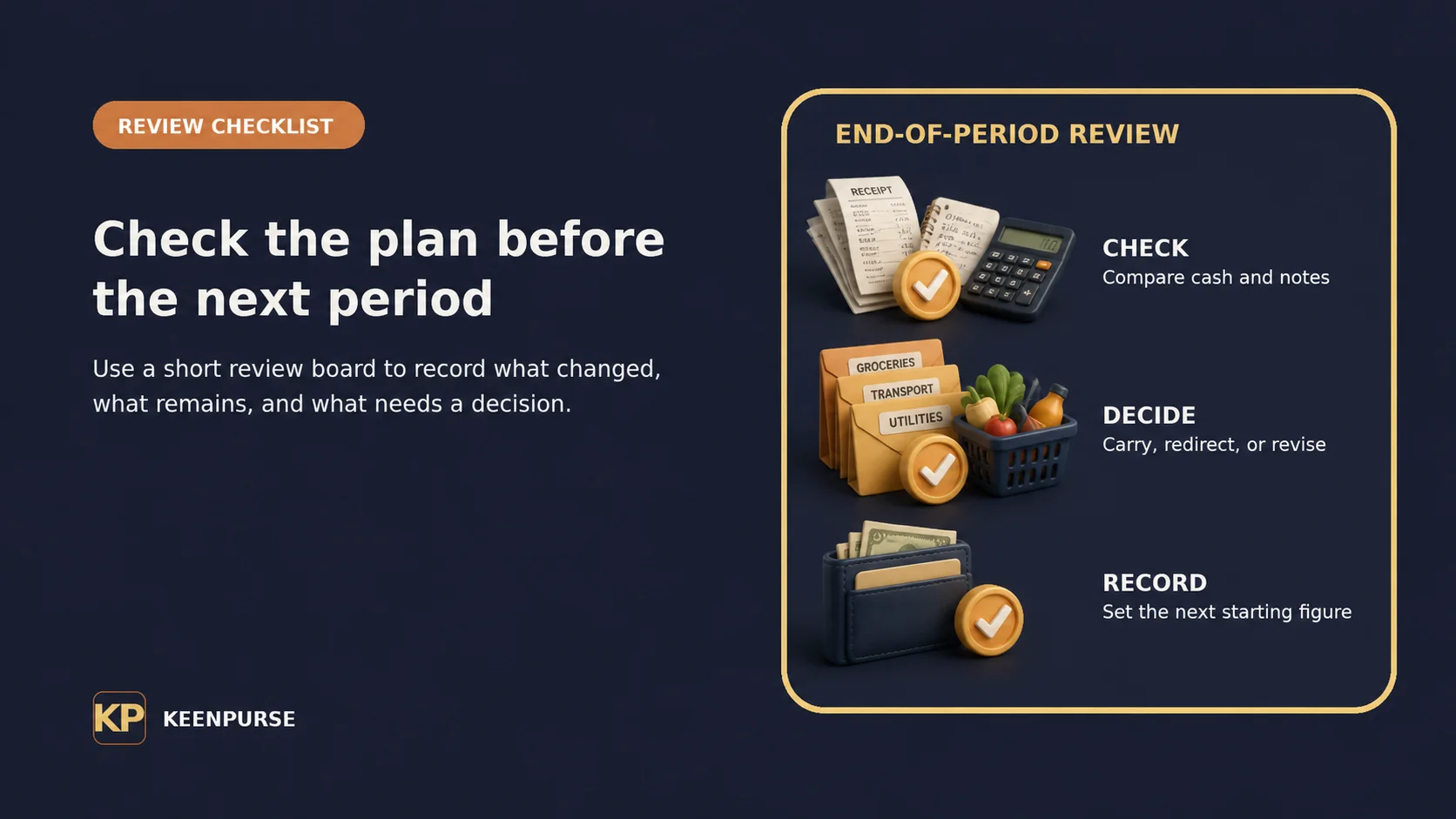
- Review before refilling. Compare the plan, spending record, and cash remaining. Use what you observe to reconsider the next period, not to judge yourself.
Keep practical safety and payment constraints in view. Consider the practical risk of carrying cash and whether the merchant accepts it. If an expense must be paid electronically, forcing it into a cash envelope can create extra confusion rather than clearer records.
Built-in printable category and tracker table
Copy this table into a notebook, spreadsheet, or printed page. Blank cells are intentional: fill them with your own category names and amounts. It is a planning aid, not a promised download, product, or financial recommendation.
| Category | Planned amount | Spent | Remaining | Review before next period |
|---|---|---|---|---|
| Groceries | ______ | ______ | ______ | Keep, change, or split category? |
| Transport | ______ | ______ | ______ | Did the period fit your routine? |
| Eating out | ______ | ______ | ______ | Was each payment recorded? |
| Personal spending | ______ | ______ | ______ | Carry forward or reconsider? |
| Other: ______ | ______ | ______ | ______ | Is this category specific enough? |
To calculate the final column of numbers, subtract recorded spending from the planned amount. For example only, a fictional planned amount of 50 units minus 18 units recorded equals 32 units remaining. That arithmetic does not predict how much anyone should spend or save.
Cash stuffing without cash
You can use cash stuffing logic without carrying physical cash. A hybrid system might keep money in an account while a notebook, spreadsheet, or app records category balances. Some services may offer labeled balances, transfers, or budgeting features, but availability, fees, terms, and transaction handling can vary by provider and location.
The question is simple: can you see the category amount and update it after spending? A manual sheet may be enough for some people. If you are comparing digital tools, read our budgeting app comparisons for the product-review scope rather than treating this guide as an app recommendation.
A hybrid approach also needs a reconciliation step. If a card transaction is recorded late or a balance changes for another reason, check the account record and update the category log. Check the relevant account record before treating a displayed balance as available cash.
What to do with money left in an envelope
At period end, unspent cash is information before it becomes a decision. You can carry it into the same category, assign it to a named goal, or use the review to adjust a future planned amount. None is automatically best; the choice depends on the purpose of the category and your wider plan.
If you want to direct leftover money toward irregular future costs, learn how to create a sinking fund. If your goal is a cash reserve for unexpected expenses, read the emergency-fund guide. Those pages cover different goals, so do not assume every leftover amount belongs in the same destination.
A simple review note can prevent a common mistake: record whether the money was carried forward, moved to a goal, or returned to general cash before starting the next period. That preserves the connection between the envelope total and your tracker.
Boundaries, hype, and common mismatches
Cash stuffing is not a no-spend challenge, a debt repayment plan, an app review, or a requirement to buy a binder or supplies. For a time-limited spending freeze, see the no-spend week budget reset. It also is not a “cash stuffing business” opportunity. Treat social-media offers, kits, and income claims with caution; check the seller, terms, consumer protections, and applicable local rules before paying or sharing information.
Use the monthly money reset checklist if you want a broader routine around reviewing categories. Keep this method narrow: it is an allocation and recordkeeping tool.
A practical two-period review example
A cash stuffing review becomes easier to understand when the review is as specific as the setup. Consider this fictional example, using “units” rather than a real currency. Sam chooses two variable categories for a seven-day period: groceries and coffee. Sam enters 90 units for groceries and 20 units for coffee after looking at a personal spending plan. These are made-up numbers for an illustration, not a recommendation.
On day three, Sam spends 34 units on groceries and records the transaction. On day five, Sam spends 8 units on coffee. The tracker now shows 56 units remaining for groceries and 12 units remaining for coffee. The useful part is not whether either figure is high or low. It is that Sam can compare the record with the cash still assigned to that category before making another purchase.
At the end of the period, Sam has 18 units left in groceries and 4 units left in coffee. There is no built-in instruction that says those amounts must be spent, saved, rolled over, or removed. Sam can write down a decision and begin the next period with a clear starting figure. If cash has been mixed with other money, or a transaction was missed, the review is a prompt to reconcile the difference rather than guess.
| Fictional review step | Grocery envelope | Coffee envelope | What the tracker shows |
|---|---|---|---|
| Starting planned amount | 90 units | 20 units | Amount assigned for this period |
| Recorded spending before review | 72 units | 16 units | Entries should match receipts or notes if used |
| Cash remaining | 18 units | 4 units | Compare physical cash with the written record |
| Reader decision | ______ | ______ | Carry forward, redirect, or reconsider next period |
Make the record easy enough to keep
A cash stuffing system does not need elaborate stationery. A label, a date, a starting amount, and a place to note spending are enough to test the mechanics. If you use a notebook instead, keep the category heading and running balance together. If you use a spreadsheet, make the balance formula visible so you can check it. The goal is a record you can read during a real purchase, not a perfectly styled template.
Try assigning one job to each line. “Groceries” could mean food bought for home meals, while “eating out” could mean prepared meals or drinks away from home. Your definitions can differ, but write them down if the distinction matters. Without a definition, it is easy to move a purchase between categories simply because one envelope has more cash left.
When more than one person spends from the same category, agree on a simple update rule before the period starts. For example, a fictional household might keep the envelope in one place and require each person to write the amount and date immediately. This is an organizational example, not advice about joint finances. Agree on access, privacy, and safety arrangements before sharing a category.
It is also reasonable to decide that certain purchases do not belong in a cash system. Online orders, automatic payments, refunds, and card-only merchants can make a physical envelope awkward. A written category record can still show the plan, but the cash itself may not be the payment tool. The method should not displace attention to payment due dates, account balances, consumer protections, or merchant rules.
Common setup errors to catch early
A first attempt is more useful when it identifies friction quickly. One common error is withdrawing an overall amount before categories are named. That turns the cash into a pile to divide later, which makes it harder to tell whether the allocation matched the plan. Label categories first, then count the cash into each one.
Another error is treating the remaining amount as a verdict. A full envelope may mean the period was unusual, a purchase was logged elsewhere, or the starting amount did not match the category’s purpose. An empty envelope may mean spending was recorded, another payment method was used, or the plan needs review. Neither result tells you, by itself, what to do next.
Watch for these practical checks:
- Period mismatch: A weekly envelope may not work if the relevant expense happens once a month. Choose a period that makes the review readable.
- Missing transactions: A running balance cannot be trusted if some payments are recorded only from memory. Add them when you notice them and reconcile at review time.
- Mixed categories: If an envelope funds several unrelated jobs, the remaining total answers fewer questions.
- Unclear cash handling: Store cash in a way that considers household access and loss risk. Choose a storage approach that fits your household and local circumstances.
- Copying another person’s amounts: Social posts can provide layout ideas, but they do not establish a suitable category plan or financial outcome for you.
For a broader month-end review routine, use the monthly money reset checklist.
How to decide whether this method fits a purchase
Before placing an expense in a cash stuffing envelope, ask four plain questions. Is the category variable enough that a planned amount would be useful to see? Can you pay for it with cash without creating a missed payment or extra complication? Can you record the transaction promptly? And will you review the result before making the next allocation?
If the answer to one of those questions is no, use another tracking approach for that category. That choice does not mean cash stuffing failed. It means a physical allocation tool has limits. For example, a person may use envelopes for a market purchase but keep a recurring electronic bill in a calendar and account register. Separating the tools can be clearer than forcing every expense through the same format.
Payment terms and cash acceptance can differ by merchant and payment method. Check the current terms before changing how you pay. For UK readers, MoneyHelper’s budgeting guidance is another general starting point; cash stuffing does not replace a bank’s records, a payment agreement, or local consumer guidance.
Frequently Asked Questions
What is cash stuffing?
Cash stuffing is the practice of setting aside pre-decided cash amounts for named spending categories and recording what is spent during a chosen period. It is an organizational method, not a savings guarantee or debt solution.
Is cash stuffing the same as envelope budgeting?
Usually, yes. Cash stuffing, cash envelope system, and envelope budgeting are commonly used for the same allocate-cash idea. The labels vary, but the core process is assigning category amounts before spending.
Which cash stuffing categories should I start with?
Start with a small number of variable categories you can name clearly, such as groceries, transport, or personal spending. Enter amounts from your own plan; no universal category list or amount fits every household.
Can I use cash stuffing without carrying cash?
Yes. A hybrid approach can track separate category balances in a notebook, spreadsheet, or digital tool while payments remain electronic. Provider features, fees, availability, and protections should be checked before choosing a tool.
What should I do with money left in an envelope?
You can carry it forward, direct it to a named goal, or revise a future category plan. Record the choice so the cash and tracker remain aligned. The appropriate option depends on your own priorities.
Is cash stuffing a business?
No. Cash stuffing is a budgeting method, not a business model or income promise. Be cautious with social-media offers that package it as a route to earnings, and check seller and consumer-protection details.
Country and account-safety limits
Cash stuffing is a general budgeting method; it does not determine how cash deposits, electronic balances, consumer protection, or deposit insurance work. Those protections and access rules vary by country and provider. Before moving money, check the relevant local regulator or deposit-protection scheme and keep only an amount of physical cash that is practical and safe for your circumstances.
Sources and further reading
- Consumer Financial Protection Bureau budgeting resources — U.S. consumer budgeting information.
- MoneyHelper budgeting guidance — UK budgeting information.