A high yield savings account can make idle cash work harder—but the label does not mean the same product or protection in every country. The useful question is whether the account is safe and accessible for money you may need soon.
TL;DR
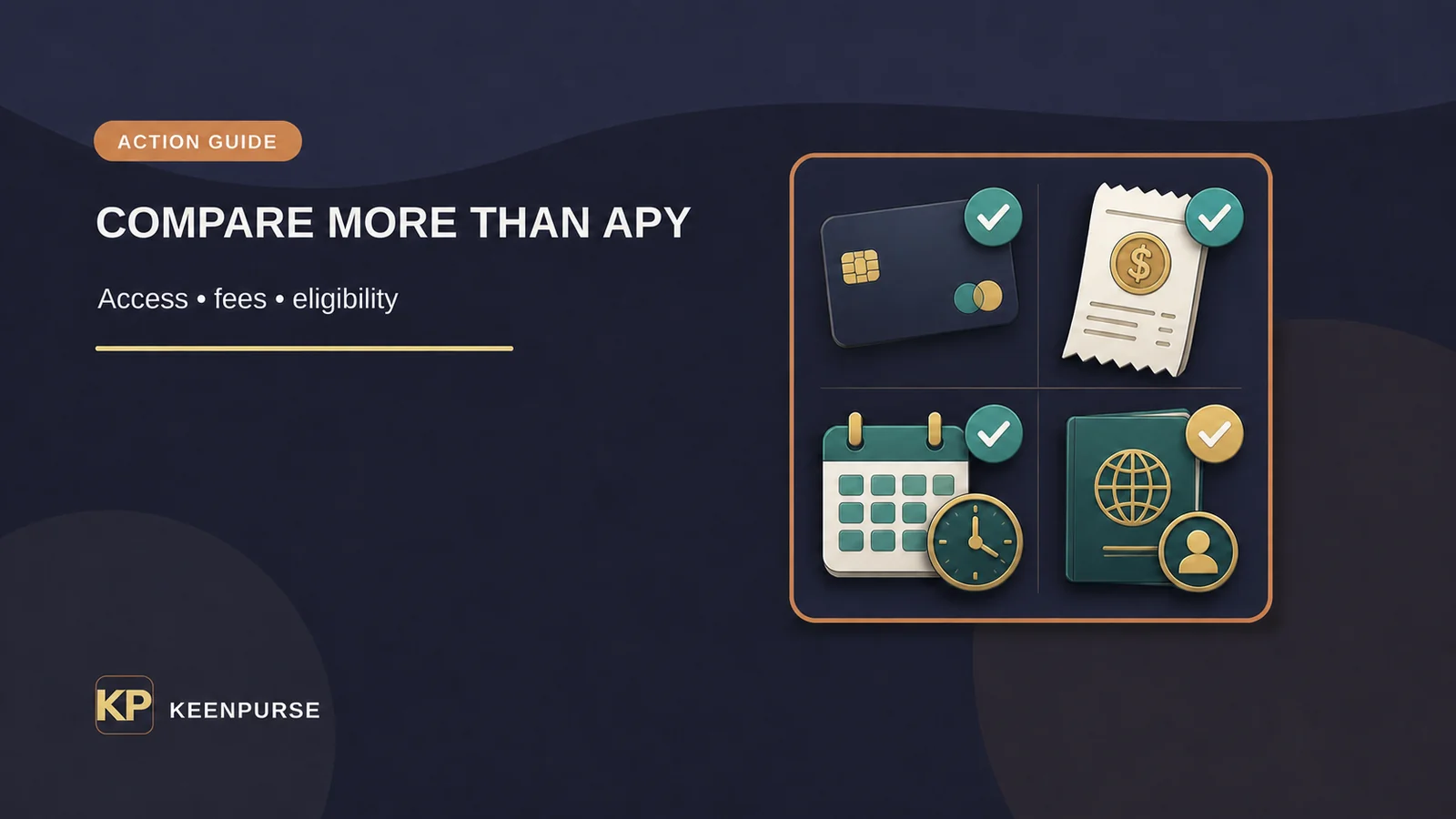
A high-yield savings account (HYSA) is a savings account marketed for a competitive variable interest rate. APY expresses compounding over one year. Before comparing offers, check who holds your money, deposit protection, fees, access rules, currency, and whether the advertised rate can change.
Key Takeaways
- An HYSA is for accessible cash, not a substitute for a long-term investment plan.
- APY includes compounding over a year; the advertised rate can still change.
- Deposit protection depends on the institution, account ownership, country, and—in some fintech arrangements—how customer funds are held.
- A higher headline rate can be less useful if it comes with withdrawal limits, fees, a currency mismatch, or weak access from where you live.
- Use an HYSA comparison as a checklist, not a recommendation list: the right account depends on your country and cash needs.
- For an emergency fund, prioritize safety and access before chasing a slightly better rate. Read our emergency-fund guide.
What Is a High Yield Savings Account?
A high-yield savings account is a cash savings account designed to pay interest while keeping money available for future withdrawals. In the United States, “HYSA” is a common label for online or bank savings accounts with a competitive annual percentage yield. In the UK and Europe, comparable products may be described as easy-access savings, instant-access savings, savings accounts, or deposit accounts rather than HYSAs.
A high-yield savings account is usually a home for short-term cash: it pays interest, keeps the balance separate from daily spending, and may allow relatively quick access. It is not automatically the best account for every saver, nor is it a guarantee that your purchasing power will rise after inflation.
KeenPurse uses “HYSA” here as a practical umbrella term for these cash-saving products. Always read the provider’s current terms and the rules that apply where you live.
High Yield Savings Account: How APY Actually Works
APY, or annual percentage yield, is meant to show what a balance could earn over a year including compounding, assuming the stated conditions hold. A nominal annual interest rate may describe the rate before the effect of compounding is expressed. The difference can be small on a modest balance, but it is still useful when comparing like-for-like accounts.
Here is a calculator-style illustration. These are not current market rates, offers, or forecasts. They assume a balance is left untouched for one year and interest compounds as the account’s APY implies.
| Starting balance | Illustrative APY | Illustrative interest after one year | Illustrative ending balance |
|---|---|---|---|
| $1,000 | 2.00% | $20 | $1,020 |
| $1,000 | 4.00% | $40 | $1,040 |
| $5,000 | 2.00% | $100 | $5,100 |
| $5,000 | 4.00% | $200 | $5,200 |
| $10,000 | 4.00% | $400 | $10,400 |
The arithmetic is intentionally simple: starting balance × illustrative APY. Actual interest can differ because rates can change, compounding schedules vary, deposits and withdrawals alter the balance, and some offers have eligibility conditions.
Savings rates can change, so the rate displayed today is not necessarily the rate you will keep.
High Yield Savings Account: Is Your Money Safe?
“Protected” is not a marketing adjective. It is a legal and operational question: which licensed institution holds the deposit, which scheme covers it, and what limits and eligibility rules apply?
| Region | Scheme to check | Commonly cited headline limit | What to confirm before depositing |
|---|---|---|---|
| United States | FDIC for eligible bank deposits; NCUA for eligible credit-union deposits | FDIC: $250,000; NCUA: $250,000, subject to applicable ownership and account rules | Institution membership, ownership category, account type, and aggregation across accounts |
| United Kingdom | Financial Services Compensation Scheme (FSCS) | £120,000 per eligible person, per bank, building society, or credit union | Whether the provider is FSCS-authorised, the banking licence behind the brand, and temporary-high-balance rules |
| European Union | National deposit-guarantee scheme under EU rules | €100,000 per depositor, per bank, subject to applicable national scheme rules | The bank’s home-country scheme, legal entity, local eligibility, and any national implementation details |
These headline limits are not a substitute for the official scheme pages. Deposit insurance has limits and conditions and does not automatically cover every investment, e-money balance, or product sold through a financial app.
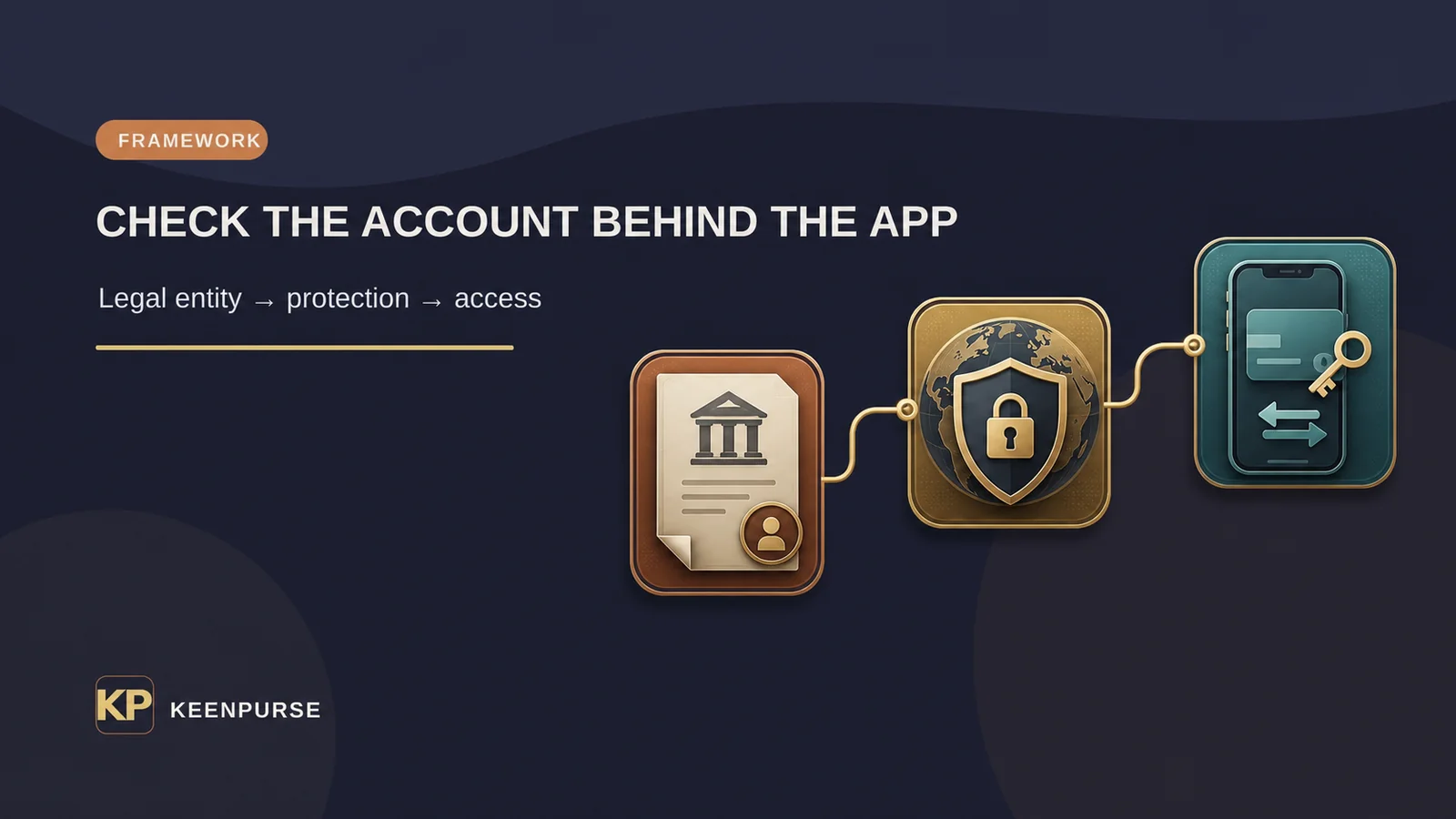
This is especially important for fintech and neobank-style apps. Identify the legal entity holding the funds and confirm whether your specific product is an eligible deposit under the relevant protection scheme.
Official deposit-protection sources
- FDIC: Deposit insurance
- NCUA: National Credit Union Share Insurance Fund
- FSCS: Banks, building societies and credit unions
- European Commission: Deposit guarantee schemes
High Yield Savings Account: US vs UK vs EU Access
The same search can lead to very different choices depending on your residence, currency, and local banking access. The table below is a comparison framework, not a ranking and not an endorsement of any bank, app, or provider.
| Consideration | United States | United Kingdom | European Union / Spain |
|---|---|---|---|
| Common product wording | “High-yield savings account” | Easy-access or instant-access savings | Savings/deposit account; terminology varies by country |
| Protection question | Is the deposit at an FDIC-insured bank or NCUA-insured credit union? | Is the firm covered by FSCS, and under which banking licence? | Which national deposit-guarantee scheme covers the bank? |
| Currency question | Usually US dollars | Usually pounds sterling | Often euros, but not always |
| Access question | Eligibility can depend on residency, identification, and provider rules | Check withdrawal conditions and account eligibility | Cross-border availability and tax reporting can vary by country |
| Fintech/provider-class question | Check the partner bank and account structure | Check the legal entity and protection status | A fintech app’s brand name does not establish what protection applies; inspect the specific product terms and legal entity. |
A reader in Spain should not copy a US comparison and assume the same account can be opened, held in euros, or covered in the same way. Start with your residence country and spending currency.
When an HYSA is—and isn’t—the right home for cash
An HYSA can be a sensible bucket for cash you may need within a relatively short period, especially when quick access and capital stability matter more than long-term growth. That makes it a natural topic for an emergency fund, but the account choice is only one part of the plan. If the money has a known future date, compare a certificate of deposit: it may lock a rate for the term but restrict access. See how to build an emergency fund in 90 days.
It can also work for a defined sinking fund—money set aside for a known future expense—if the access rules match the deadline. Learn how to create a sinking fund. For budgeting context, see the 50/30/20 rule.
It is not the same as investing: cash emphasizes access and stability, while investments may involve market risk and a longer horizon. Start with our beginner investing guide.
High Yield Savings Account: Compare Without Distraction
Use this five-question filter before opening any savings account:
- Who is the legal provider? Find the licensed bank or credit union, not only the app brand.
- What protection applies? Confirm the scheme, limit, ownership rules, and whether your exact product is eligible.
- How variable is the rate? Check whether it is variable, introductory, tiered by balance, or conditional on activity.
- How can you access the money? Look for notice periods, withdrawal caps, transfer delays, and account-closure rules.
- What is the real friction? Consider fees, currency conversion, tax reporting, minimum balances, and whether the account works from your country.
This prevents a common mistake: comparing one large percentage while ignoring the conditions attached to it.
FAQ
What Is a High Yield Savings Account?
It is a savings account that pays a relatively competitive interest rate while keeping money in cash. The exact name and features vary by country, so compare the account terms, access rules, and deposit protection rather than relying on the label alone.
How is APY different from a regular savings account’s interest rate?
APY includes the effect of compounding over one year under the stated conditions. A regular account can also quote APY; “regular” versus “high-yield” describes the product’s positioning, not a universal calculation method.
Are high-yield savings accounts safe?
They can be safe, but safety depends on the institution and the protection scheme that applies to you. The most secure high-yield savings account is one offered by a licensed institution whose accounts are covered by official deposit insurance in your country. Confirm the provider, the account type, and the current coverage limit before depositing.
Can I withdraw from a high-yield savings account without a penalty?
Withdrawals are usually allowed at any time, but terms vary by account and country. Some accounts limit the number of withdrawals per month, others charge fees after a certain count, and a few require notice. Check the account disclosure for withdrawal limits, fees, and any minimum balance requirement before treating the account as fully liquid.
They can be, but safety depends on the specific provider and protection scheme. Check the licensed institution, the account structure, and the official deposit-insurance rules for your country. For current headline limits and eligibility conditions, use the official FDIC, NCUA, FSCS, or relevant national deposit-guarantee scheme page.
How much interest will I earn on $X?
A rough one-year illustration is balance × APY when you assume the rate stays unchanged and make no withdrawals. Real results can differ, so use the provider’s calculator and current disclosure for an actual account.
High Yield Savings Account: Can You Use One Outside the US?
Potentially. UK and EU readers should compare local easy-access or savings products and verify the provider’s legal entity before applying.
A high yield savings account is worth choosing when you compare the all-in conditions: deposit protection, fees, access, currency, and whether the advertised rate is fixed or variable.
Educational disclaimer: Educational information only — not personalized financial, tax, legal, or investment advice. Read the full disclaimer.