TL;DR: A sinking fund is money you set aside in small, scheduled amounts for a known future expense. It turns a $600 annual bill into a $50 monthly task, so the expense does not have to become debt or raid your emergency fund.
Key Takeaways
- A sinking fund is for a known expense; an emergency fund is for an unknown one.
- Start with the due date and total cost, then divide by the number of paychecks or months left.
- Give each fund a name and a separate balance, even if the money sits in one savings account.
- Small funds for travel, repairs, annual fees, and gifts can prevent a budget from being derailed.
- Review the target when the price or deadline changes; do not treat the original number as permanent.
What Is a Sinking Fund?
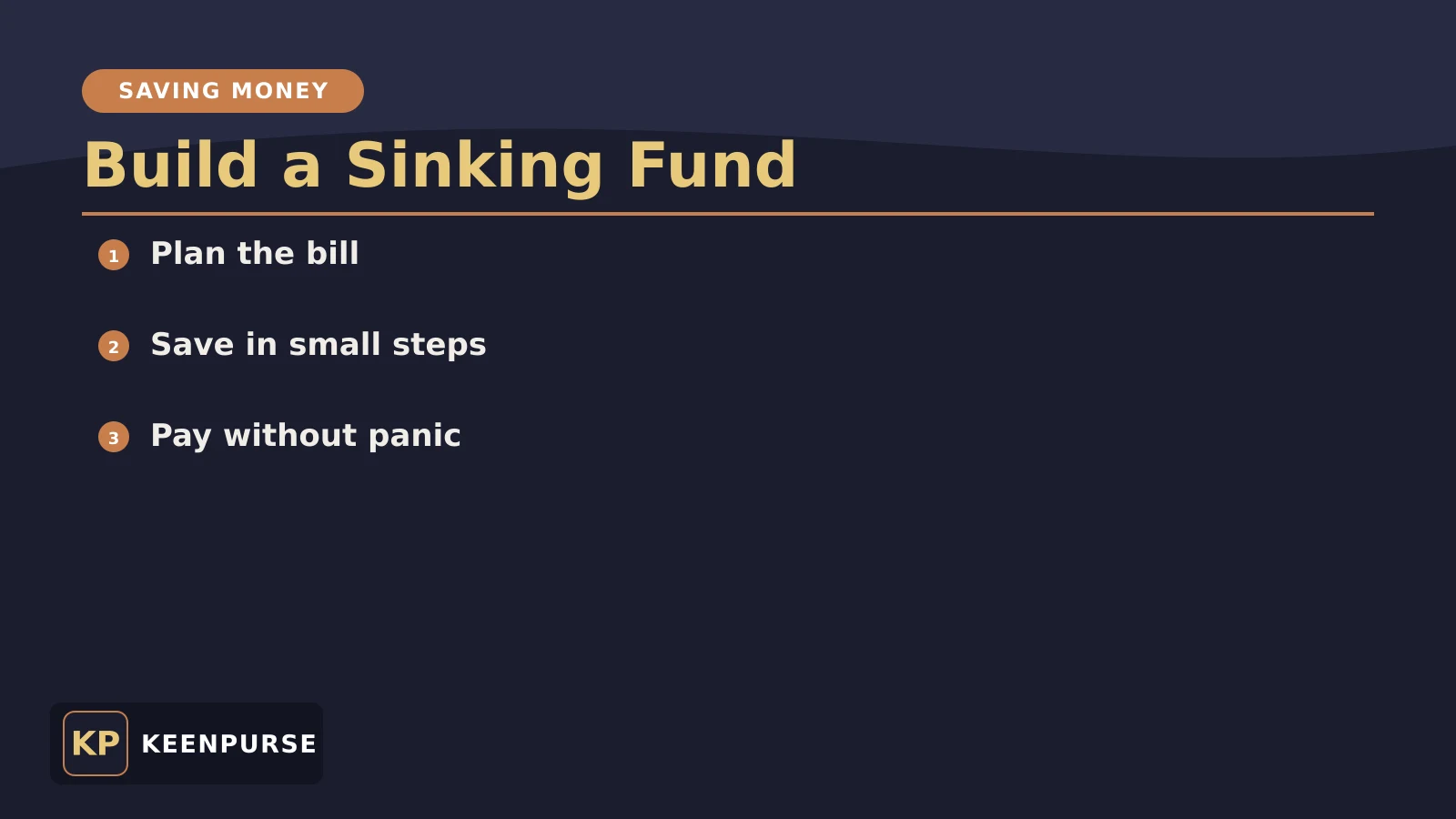
A sinking fund is a planned pot of cash for an expense you can see coming. Car insurance renewals, holiday travel, a laptop replacement, and annual subscriptions are not emergencies simply because the bill arrives all at once. The goal is to pre-fund them gradually.
Think of it as breaking one future bill into smaller present-day decisions. If a $720 insurance premium is due in 12 months, setting aside $60 a month creates the same $720 without a last-minute scramble. The numbers here are illustrative; use your own quote, due date, and currency.
Sinking fund vs. emergency fund
| Fund | What it covers | When you use it | Example |
|---|---|---|---|
| Sinking fund | Expected, specific expenses | On the planned date | A $900 annual insurance bill |
| Emergency fund | Unexpected loss or urgent need | When something genuinely unplanned happens | A sudden job loss or urgent home repair |
| Everyday spending | Regular variable costs | This month | Groceries or transport |
That distinction matters. Using emergency savings for a predictable bill can leave you exposed when a real emergency shows up. If you are still building emergency savings, start tiny sinking funds for the expenses that are most likely to cause debt.
How to Calculate Your Monthly Sinking Fund Amount
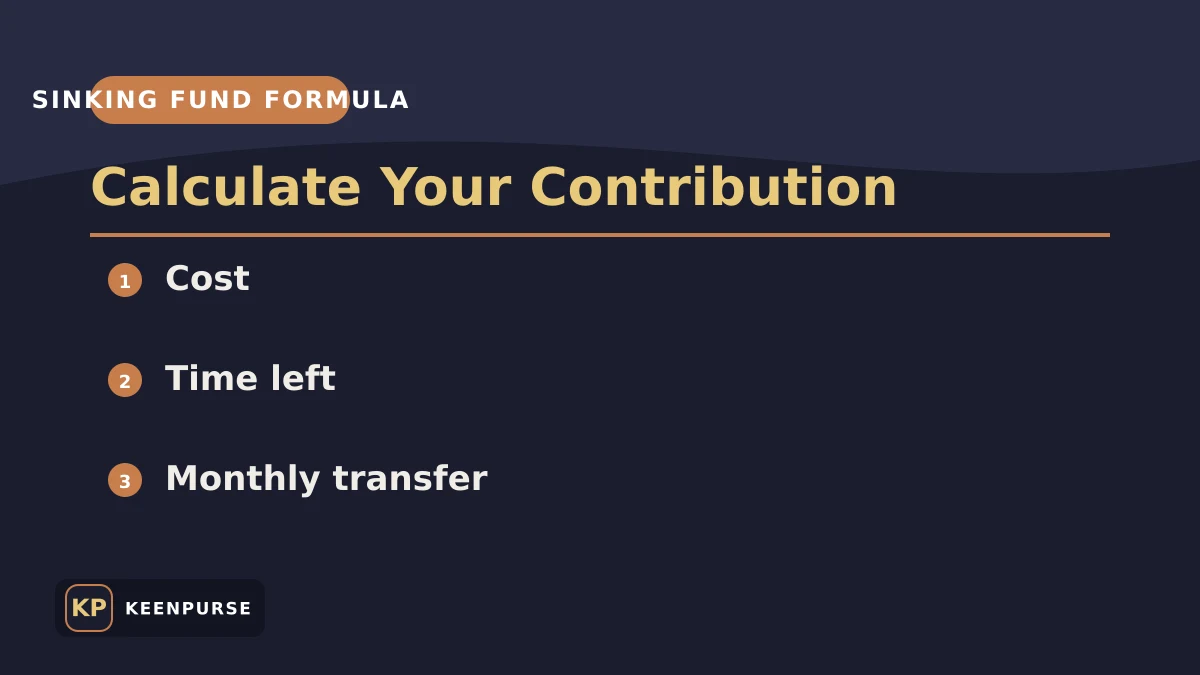
Use a simple formula: estimated cost ÷ number of contributions remaining = amount to save each contribution. The contribution frequency should match the way you are paid. Monthly works for a monthly budget; per-paycheck works well if you are paid every two weeks.
| Goal | Estimated cost | Time left | Monthly amount |
|---|---|---|---|
| Car maintenance | $480 | 8 months | $60 |
| Holiday gifts | $360 | 6 months | $60 |
| Annual software renewal | $120 | 12 months | $10 |
| Weekend trip | $750 | 5 months | $150 |
For a biweekly paycheck, a $480 target due in eight months is roughly 17 paychecks away. $480 ÷ 17 is about $28 per paycheck. Round up to $30 if your budget allows; the small buffer protects you if the final cost is higher than expected.
Choose Funds That Solve a Real Budget Problem
Do not create 20 funds on day one. Start with expenses that have previously pushed you to a credit card, made you skip another goal, or surprised you even though they happen every year. The best first funds are boring: insurance, vehicle upkeep, annual memberships, medical deductibles where applicable, and planned travel.
- Annual or semiannual bills: insurance, memberships, domain renewals, professional dues.
- Irregular maintenance: tires, servicing, appliance replacement, home repairs.
- Seasonal spending: holidays, birthdays, school supplies, travel.
- Short-term goals: a security deposit, a course, or a planned move.
Set Up the System Without Making It Complicated
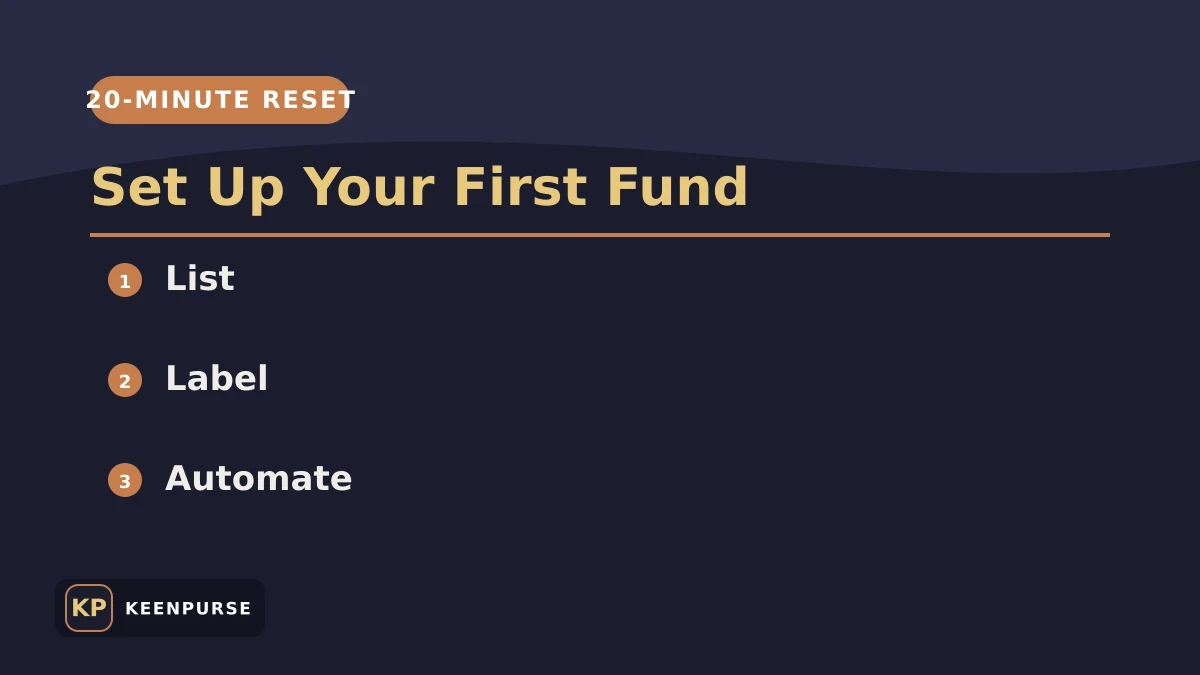
- List the cost, date, and priority. Use last year’s receipt, a current quote, or a conservative estimate. Mark the due date in your calendar.
- Decide where the money lives. A savings account is usually appropriate for short-term planned expenses. Keep it accessible, rather than taking market risk with money you need soon.
- Name the balance. Use account buckets, a spreadsheet, or a notes app. The label matters because it stops “available cash” from being spent twice.
- Automate the transfer. Schedule it just after payday. Automation is less about discipline and more about removing repeat decisions.
- Pay the bill from the fund, then restart it. Once the expense is paid, set the next due date and begin the next cycle.
A Practical Example: Funding a $1,200 Year of Irregular Costs
Imagine you expect $1,200 of irregular but predictable costs over the next year: $500 for car care, $300 for gifts, $250 for annual bills, and $150 for a short trip. Instead of treating each one as a surprise, the combined monthly target is $100. You could save that in one “planned expenses” account and track four named balances within it.
| Category | Annual target | Monthly transfer | Rule |
|---|---|---|---|
| Car care | $500 | $42 | Use only for servicing and repairs |
| Gifts | $300 | $25 | Pause once the target is full |
| Annual bills | $250 | $21 | Reprice when a renewal notice arrives |
| Trip | $150 | $12 | Cut first if cash flow tightens |
One account can be simpler than multiple accounts, especially at the beginning. The trade-off is tracking: your total balance might be $400, but it does not mean you have $400 available for one purchase. The labels tell you what each dollar is already assigned to.
Where a Sinking Fund Fits in Your Budget
A sinking fund is a category in a realistic spending plan, not an extra expense on top of an already stretched budget. If there is no room, reduce the goal, extend the timeline, or pause a lower-priority fund. Borrowing from rent, groceries, or minimum debt payments to make a sinking-fund transfer defeats the point.
If you are using a percentage framework, start with the basics in our guide to the 50/30/20 budget rule. Then add sinking funds as planned spending. An emergency reserve has a different job; see how to build an emergency fund in 90 days for a separate starting plan.
Common Mistakes That Make Sinking Funds Fail
Saving without a deadline
A vague “car fund” can absorb money forever without becoming useful. Give it a next review date and a target range. A $500 target is more actionable than “save for repairs.”
Using the fund for unrelated spending
If the money keeps drifting into restaurant meals or impulse purchases, move it out of your everyday checking account or add a clearer label. The friction is a feature.
Ignoring price changes
A renewal notice can make last year’s estimate obsolete. Update your monthly amount early rather than relying on a credit card to cover the gap.
Treating every expense as equally urgent
When cash flow is tight, protect essential upcoming costs first. A vacation fund can wait; a mandatory insurance payment may not be able to.
Your 20-Minute Sinking Fund Reset
- Open your calendar and list the next six months of non-monthly bills.
- Pick the top two expenses that would otherwise cause stress or debt.
- Estimate each cost and divide it by the remaining paydays.
- Create labels and schedule the first automatic transfer.
- Put a 10-minute review on your calendar for three months from now.
The next step is not finding a perfect app. It is assigning the next dollar a job. If a budgeting tool would help you see these categories, compare the trade-offs in our budgeting apps comparison.
Frequently Asked Questions
Should a sinking fund earn interest?
For short-term goals, keeping the money in an accessible savings account may be reasonable. Interest can help a little, but availability and the right balance matter more than chasing a rate. Check the account terms and your local deposit protection rules.
How many sinking funds should I have?
Start with two or three. Add another only when you can state its purpose, target amount, and deadline. A smaller system that you update is better than a detailed system you abandon.
Can I use a credit card and reimburse it from a sinking fund?
That can work if you already have the full cash balance and pay the card by its due date. It is not a substitute for funding the expense; interest and late fees can erase the benefit.
What happens if I do not use all the money?
Keep it for the next cycle, reassign it deliberately to a higher-priority goal, or use it to build your emergency reserve. Avoid silently folding it into everyday spending.