
TL;DR
How to build credit for beginners means establishing a credit record from no history or a very thin one — not repairing or improving an existing score.
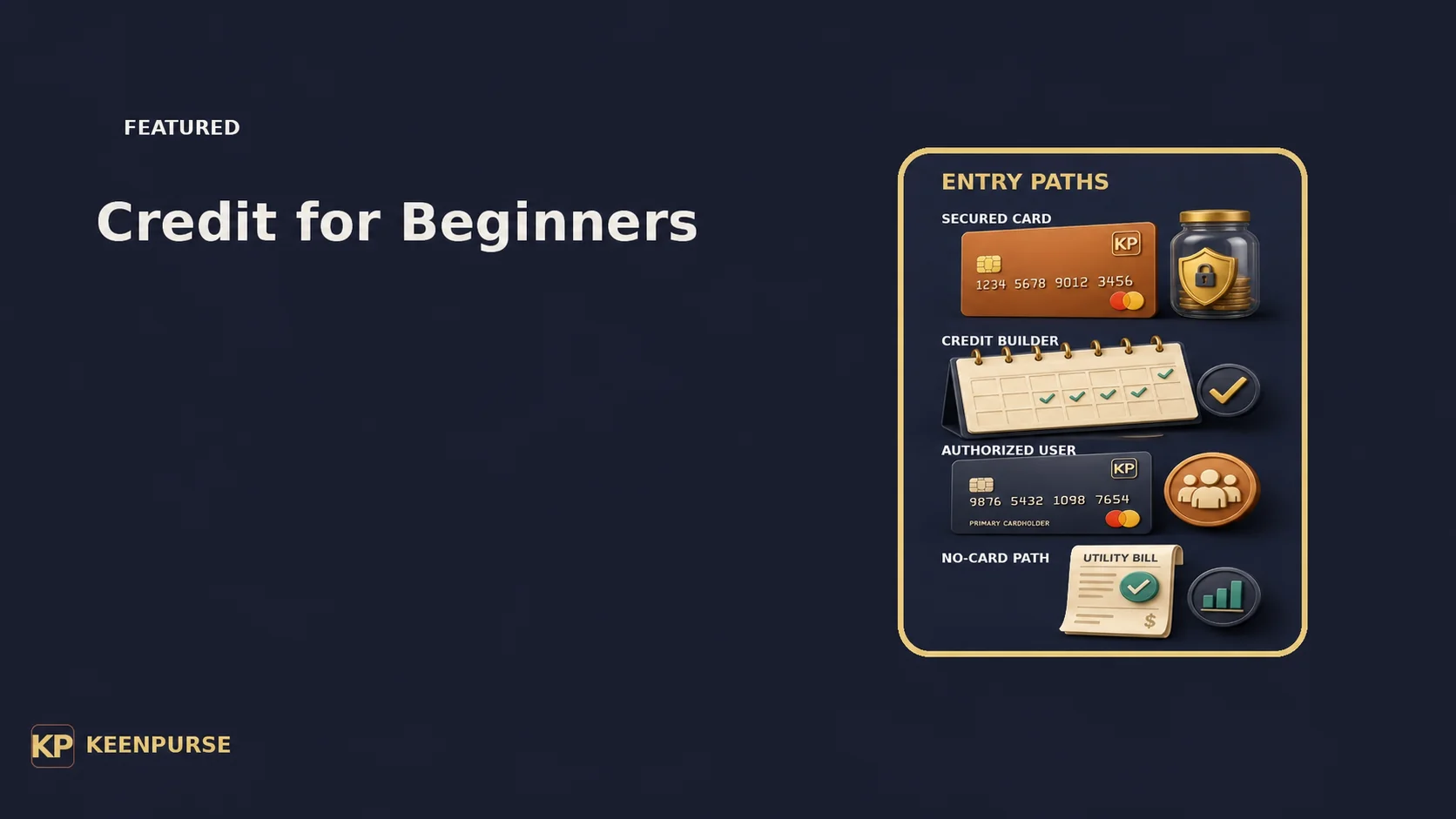
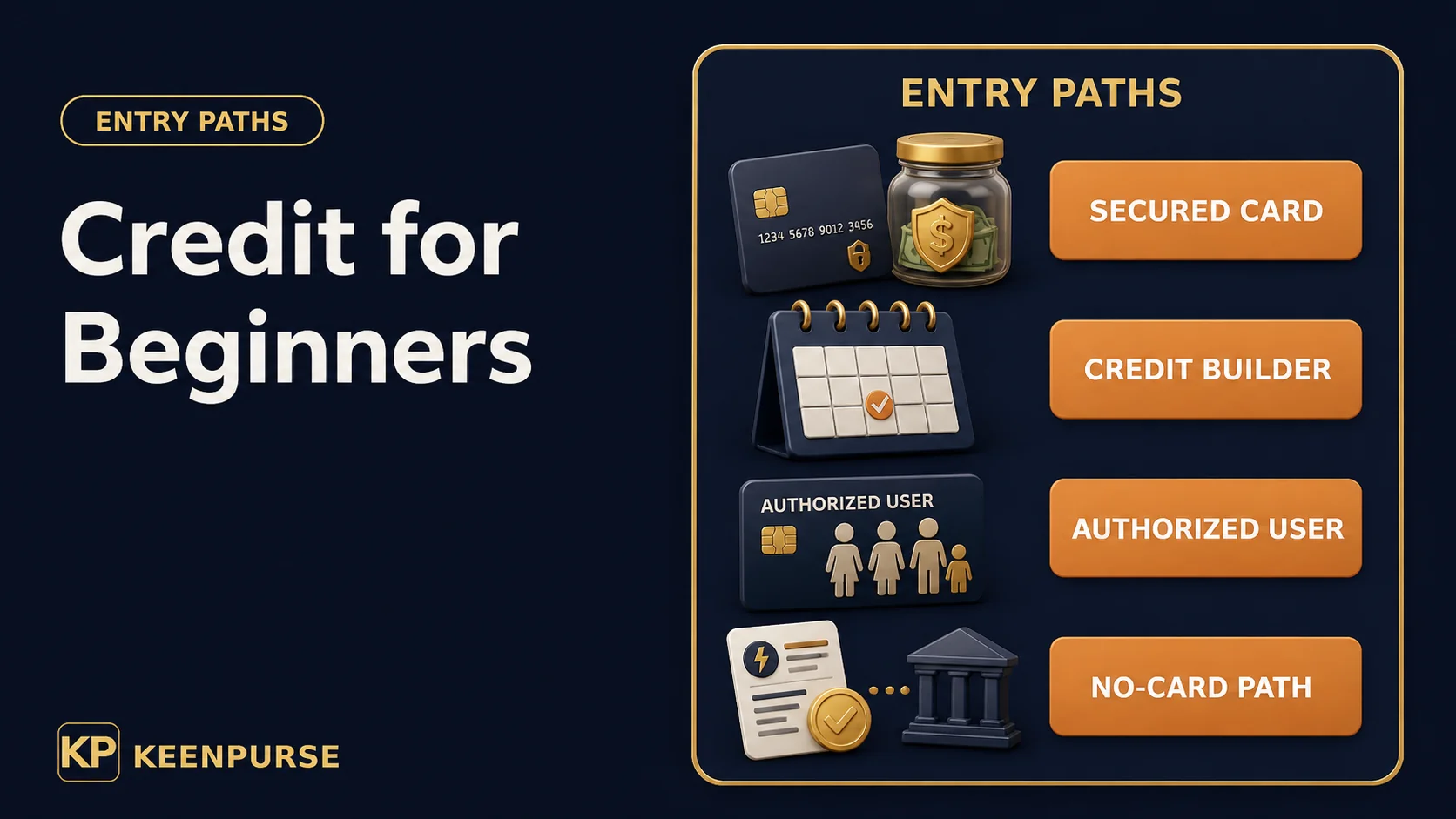
The main paths are a secured credit card, a credit-builder loan or account, being added as an authorized user, and no-card routes where a cell phone, utility, or rent record is reported. Every path depends on the bureaus and the market you are in, so none comes with a guaranteed timeline or outcome .
Key Takeaways
- Building credit from scratch is about creating a first record; improving an existing score is a separate job with its own methods .
- A person with no or very little history is sometimes called “credit invisible” or a “thin file” — a real and common starting point .
- The common entry paths are a secured card, a credit-builder loan or account, an authorized-user addition, and no-credit-card routes like cell-phone, utility, or rent reporting .
- Reporting and scoring mechanics vary by credit bureau and by country, so no rule is universal ; and no lender or bureau can honestly promise a score outcome, a timeline, or an approval.
- The reliable habit is simple and durable: make what you do report, keep payments current and on time, and keep balances low relative to limits where a limit exists .
- Building a first record feeds into a larger routine like the 50/30/20 budget rule and a broader understanding of how credit cards work.
What does it mean to build credit from scratch?
“Building credit from scratch” and “improving a credit score” are two different problems, and confusing them is where a lot of bad advice starts. How to build credit for beginners is not the same as improving a score you already have.
Building from scratch describes a person with no meaningful credit history — sometimes called a “thin file” or “credit invisible” — who needs a first record that lenders and bureaus can see . Credit bureaus create a report when you first borrow or apply for credit, so with little borrowing there is often little to report .
Improving describes someone who already has a record and wants a higher score or cleaner report — a repair-and-optimization job built on lowering utilization, disputing errors, and lengthening payment history .
| Task | Building from scratch | Improving an existing score |
|---|---|---|
| Starting point | No or thin history; little for a bureau to report | An existing file with at least some history |
| Core job | Create a first credit record | Raise or clean up an existing record |
| Typical first tools | Secured card, credit-builder account, authorized user, no-card reporting | Utilization, payment history, error disputes, age of accounts |
| Boundary | Covered in *this* article | See how to improve your credit score by 100 points — the sibling article; this piece does not re-teach improving |
If your goal is to lift a score you already have, the sibling article is where that is covered. How to build credit for beginners is best treated as a needs question, not a products quiz.
Before any of it, remember the country caveat: credit bureaus, scoring models, and what counts as a reportable account differ across markets like the US, UK, and Canada, and bureaus use different, undisclosed formulas . A path that is standard in one market may not exist, or may work differently, in another.
That is why every entry path below carries the same boundary: it depends on the bureaus and jurisdiction you are in. How to build credit for beginners always starts by checking what counts as a reportable account where you live. How to build credit for beginners always starts by checking what counts as a reportable account where you live.
Overview table of entry paths
The table shows the main ways a beginner can start a credit record. The last column is honest: none of these guarantees a score movement, an approval, or a fixed time.
| Entry path | What it is | What it needs | Typical reporting | Not-a-promise boundary |
|---|---|---|---|---|
| Secured credit card | A card backed by a refundable deposit that acts as the credit limit | A deposit and a qualifying application | Issuer reports the account to one or more bureaus | No guaranteed approval, limit, rate, or score change |
| Credit-builder loan or account | A small loan or savings vehicle designed to report repayment activity | Ability to make the scheduled payments; terms vary by provider | Payments reported as they are made, if the provider reports | No promised score gain; terms and approval vary by provider and market |
| Authorized user | Being added to someone else’s card account | An existing cardholder willing to add you | The account may appear on your file, depending on the issuer and bureau | Not universal; depends on the cardholder, issuer, and bureau rules |
| No-credit-card paths | Rent, utility, or cell-phone payment reported to a bureau | A lease or bill in your name and a reporting service or arrangement | May be reported through specialized bureaus or programs | Availability and effect vary by provider, market, and bureau |
| Student or at-18 entry | Products and accounts aimed at first-time borrowers | Age, student status, or a qualifying application | Varies by product and provider | No guarantee of approval or of any particular starting score |
Path 1: The secured credit card
A secured credit card is often the first suggestion for someone with no history, and it is easy to see why. The card is “secured” because you put down a refundable deposit that typically sets the size of your credit limit.
The issuer reports the account to credit bureaus, which is what lets a reasonable payment history become part of your record .
Because the deposit reduces the lender’s risk, a secured card is often more accessible to a first-time borrower than an unsecured line of credit — though approval is never guaranteed.
A secured card is a common starting point in how to build credit for beginners, but it is still a real approval. A secured card is a common starting point in how to build credit for beginners, but it is still a real approval.
Many banks and credit unions offer secured cards, with a credit line that starts small equal to the deposit you put in an account . Your deposit is held while the account is open and may be refunded as you show you can pay on time (some issuers also raise your limit).
Deposit amounts, qualification rules, and graduation terms vary by issuer and market. The deposit mechanics matter, which is part of how to build credit for beginners that is easy to misread.
The habit that matters is simple: use the card for purchases you can already afford, and pay the statement balance on time and in full where you can. Carrying a balance to “build credit” is a myth — you do not need to pay interest to build a track record .
Keep reported balances low relative to your limit, because using close to your limit can hurt a score in some models . The CFPB’s guide to rebuilding your credit explains why on-time history matters.
This article name-checks products like Chime, Capital One, or Discover without comparing deposit amounts, APRs, or fees, which change and vary by applicant. If a secured card is right for you, compare current, dated issuer material in your own market.
This is why how to build credit for beginners emphasizes behavior over product claims. This is why how to build credit for beginners emphasizes behavior over product claims.
Path 2: A credit-builder loan or account
A credit-builder loan is a small loan designed less for spending money and more for building a payment record. In a common version, the money you “borrow” is held for you in a locked account while you make payments; once the term is complete, the balance is released to you.
The point is that as you make on-time payments, the account is meant to generate a payment record — but only if the provider actually reports it, and to which bureaus. Fees and interest are real, so how to build credit for beginners keeps costs on the table.
Credit-builder loans are not a free score hack. You pay fees or interest in many cases, and terms, deposit structure, and whether the activity is reported all vary by provider. Treat them as a deliberate, small tool, not a guarantee of any score change. Costs and reporting matter, so how to build credit for beginners keeps fees and terms visible.
The boundary is the same as everywhere: a product being named is not a promise that it will report the way you hope, is available in your market, or produces a fixed outcome. Read the provider’s terms and confirm which bureaus (if any) it reports to before you commit.
Path 3: Being added as an authorized user
An authorized user is someone given permission to use another person’s credit card account without being the primary account holder. The appeal is that the account may be added to your file, giving you the benefit of the primary holder’s payment history for as long as you are on the account.
Being an authorized user is just one route in how to build credit for beginners, with real conditions. Being an authorized user is just one route in how to build credit for beginners, with real conditions.
The “may” is doing heavy lifting, and it should. Whether being an authorized user builds your record depends on things not in your control: the issuer’s reporting practices, the bureaus and their rules, and whether the primary holder keeps the account in good standing.
A responsible primary holder with low balances and on-time payments is very different from one who is late or maxed out — and in some scenarios you are also exposed to the account’s behavior.
No one can guarantee that adding you as an authorized user will raise your score or change your file in any particular way. If you pursue it, do it with a cardholder you trust and do not assume the effect is automatic. Confirm what a path actually reports, a core discipline in how to build credit for beginners.
Path 4: No-credit-card paths (cell phone, utility, and rent reporting)
You do not always need a card to start a record. Some companies and services report recurring payments like rent, utilities, or cell-phone bills to credit bureaus — sometimes to the traditional bureaus, sometimes to specialized rental-data bureaus used by landlords and lenders.
The CFPB notes that payments like monthly rent or cell phone are often not automatically captured by credit reporting companies, but can be recorded — including by opting into a self-reporting service . Not every provider reports, which is the core uncertainty in how to build credit for beginners.
The catch is that “some do” does not mean “yours does.” Whether a cell-phone or utility account is reported depends on the provider, the market, and often on an opt-in program or a third-party reporting service. Rent reporting in particular often requires a service that collects and forwards your payment data, set up by you or your landlord.
Availability and impact are genuinely local, and fees and conditions may apply — do your homework before enrolling . Whether a provider reports is the decisive variable in how to build credit for beginners.
Because reporting is not automatic, ask not “does paying rent build credit?” but “does my specific rent, utility, or phone account get reported anywhere?” Verify the answer with the provider directly — it determines whether this path does anything for your record at all.
Asking the right question is the reliable method in how to build credit for beginners. Asking the right question is the reliable method in how to build credit for beginners.
Path 5: Student and at-18 entry
For people just reaching adulthood or enrolled in school, some lenders market first products at a beginner audience: student credit cards, small secured cards, or accounts with a low starting limit.
“At-18” and “student” are audience labels, not guarantees — you can turn 18 (or the local age of majority) and still be declined. Since everyday bills like rent are not reported until an arrangement is made, being young with few credit accounts usually means a thin file until something reports .
The same rules apply here as to every path: understand what the product reports, keep payments current, and do not chase a headline score. A student or first card can be a fine starting point, but its terms vary by issuer and market. First products exist, but how to build credit for beginners still depends on what actually reports.
What does NOT build credit (and myths)
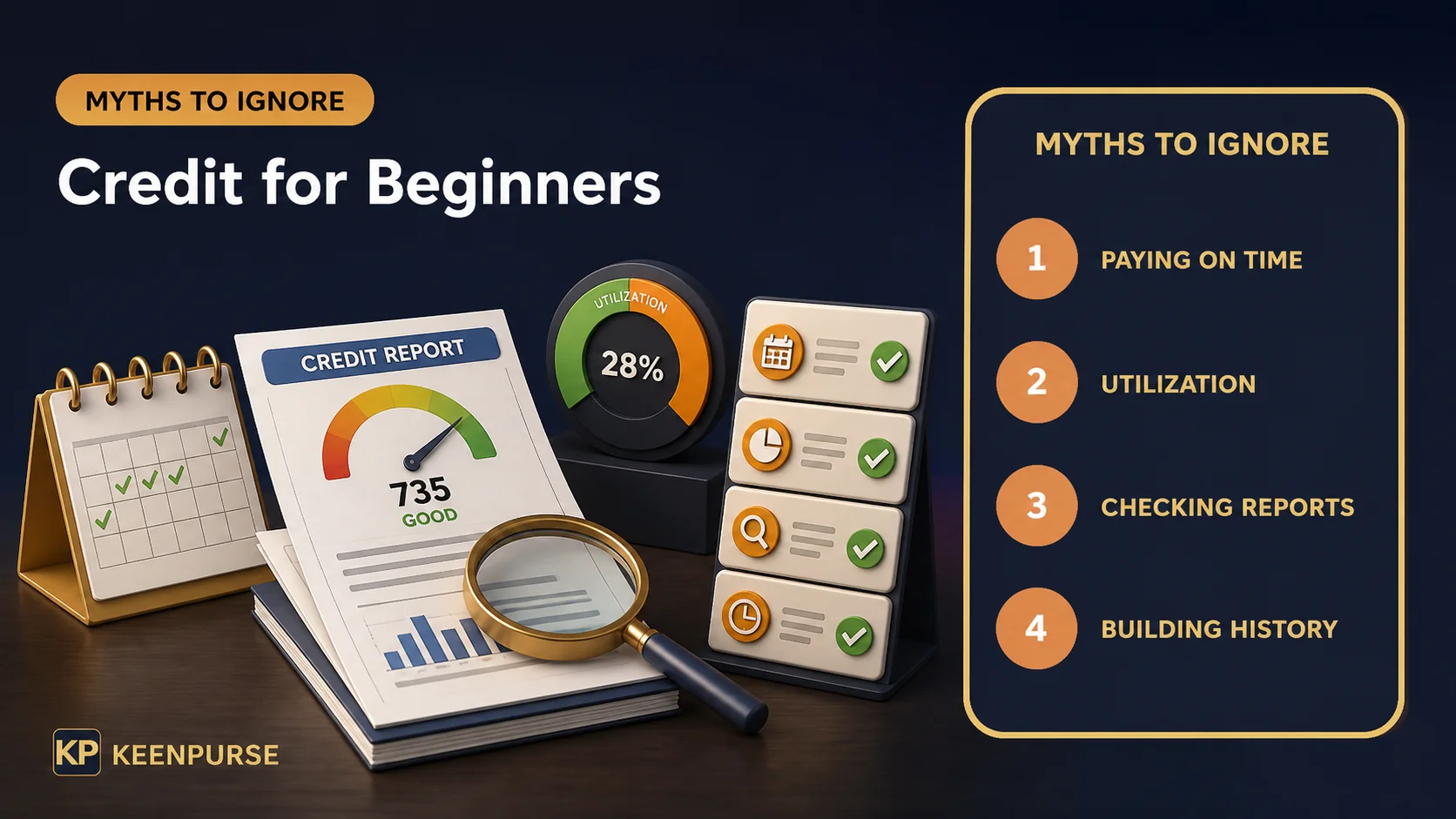
Not everything a lender can see — or that a marketing message suggests — helps you build a record. A few common myths are worth naming so you do not fall for them: Spotting myths early keeps how to build credit for beginners honest. Spotting myths early keeps how to build credit for beginners honest.
- Checking your own credit does not build it, and pulling your own report does not hurt it. A self-check is not a credit application; AnnualCreditReport.com states that checking your reports there will not affect your credit scores .
- Paying rent, utilities, or a phone bill does not automatically build credit. As covered above, it only helps if a provider or service actually reports the payment. Absent that, a regular bill is just a bill .
- Carrying a balance does not build credit faster. Interest does not buy a better record. What matters is the reported payment behavior, and you can build a history while paying in full .
- Paying off collections or closing old accounts “cleans” your file universally. The effect of closing an account or resolving a collection varies by market, bureau, and scoring model — do not treat a one-line rule as universal.
- “Boost your score by N points” headlines are a claim to inspect, not a result anyone can promise. Rebuilding takes time and has no shortcuts or secrets .
Notice the pattern: the reliable facts are about behavior (pay on time, keep balances low, report what can be reported), while the unreliable ones are all promises — points, timelines, guaranteed approvals.
Next step: improving a score you already have
Once you have a first record and some history, the job changes from building to improving — lowering utilization, keeping a long on-time payment history, disputing actual errors, and avoiding new hard inquiries unless you need them . The sibling article covers it in depth: how to improve your credit score by 100 points.
The mechanics of a card are explained in how do credit cards work, and a budget routine that keeps payments manageable lives in the 50/30/20 budget rule. Once you have a record, how to build credit for beginners becomes maintenance and reporting accuracy. Once you have a record, how to build credit for beginners becomes maintenance and reporting accuracy.
Frequently Asked Questions
What is the fastest way to build credit as a beginner?
There is no honest fastest way, because speed depends on your market, the bureaus, and which products actually report for you. Pick a path that reports to the bureaus you care about and keep payments current.
There is no fastest path in how to build credit for beginners, only a consistent one. There is no fastest path in how to build credit for beginners, only a consistent one.
Do I need a credit card to build credit from nothing?
No. Credit-builder loans or accounts, being an authorized user, and rent/utility/phone reporting can all create a first record where available . Whether any works for you depends on reporting availability in your market. No tool replaces the fundamentals in how to build credit for beginners.
Is a secured credit card always approved?
No. A secured card reduces lender risk because of the deposit, but you still go through a qualification review, and approval is never guaranteed. On-time history is the reliable foundation in how to build credit for beginners.
Does being an authorized user always help my credit?
Not automatically. It depends on whether the issuer reports the account, the bureau rules, and how the primary holder manages the account. There is no universal authorized-user guarantee. Automatic reporting does not mean guaranteed, anywhere in how to build credit for beginners. Automatic reporting does not mean guaranteed, anywhere in how to build credit for beginners.
Does a credit-builder loan guarantee a better score?
No. It can create a payment record if the provider reports it, but the score effect, the fees, and the reporting all vary. Read the terms before you commit.
Can anyone promise a specific score increase from building credit?
No. Rebuilding takes time with no shortcuts or secrets, and outcomes depend on your file, your market, and the scoring models in play — none of which a guide can know .
Treat any promised number as a claim to question. Patience is the honest conclusion of how to build credit for beginners. Patience is the honest conclusion of how to build credit for beginners.
Sources and further reading
- CFPB — “How to rebuild your credit” (US, government). Consumer Financial Protection Bureau, accessed 2026-08-19. consumerfinance.gov/consumer-tools/credit-reports-and-scores/how-to-rebuild-your-credit/. Supports: rebuilding takes time with no shortcuts or secrets; credit scores rest on paying bills on time over time; a secured card (deposit equal to the limit) can help establish a credit record and the deposit may be refunded as you pay on time; using close to your limit can hurt a score; checking reports and disputing errors.
- CFPB — “Who are the Credit Invisible?” (US, government blog). Consumer Financial Protection Bureau, 2015 (report cited on the page), accessed 2026-08-19. consumerfinance.gov/about-us/blog/who-are-credit-invisible/. Supports: roughly 26 million US adults (about one in ten) are “credit invisible” with no traditional bureau history; rent and cell-phone payments are not automatically captured by credit reporting companies but can be recorded, including via self-reporting services with fees and conditions.
- AnnualCreditReport.com (US, government-authorized). The three major US credit reporting companies’ central source for the free reports you are entitled to under federal law; checking your reports there does not affect your credit scores. Accessed 2026-08-19. annualcreditreport.com.
- FCAC — “Credit report and score basics” (Canada, statutory consumer agency). Financial Consumer Agency of Canada, accessed 2026-08-19. canada.ca/en/financial-consumer-agency/services/credit-reports-score/credit-report-score-basics.html. Supports: credit bureaus create a report when you first borrow or apply for credit; lenders send account information to bureaus; bureaus and lenders use different, undisclosed scoring formulas — i.e. credit mechanics and scoring vary by market.