
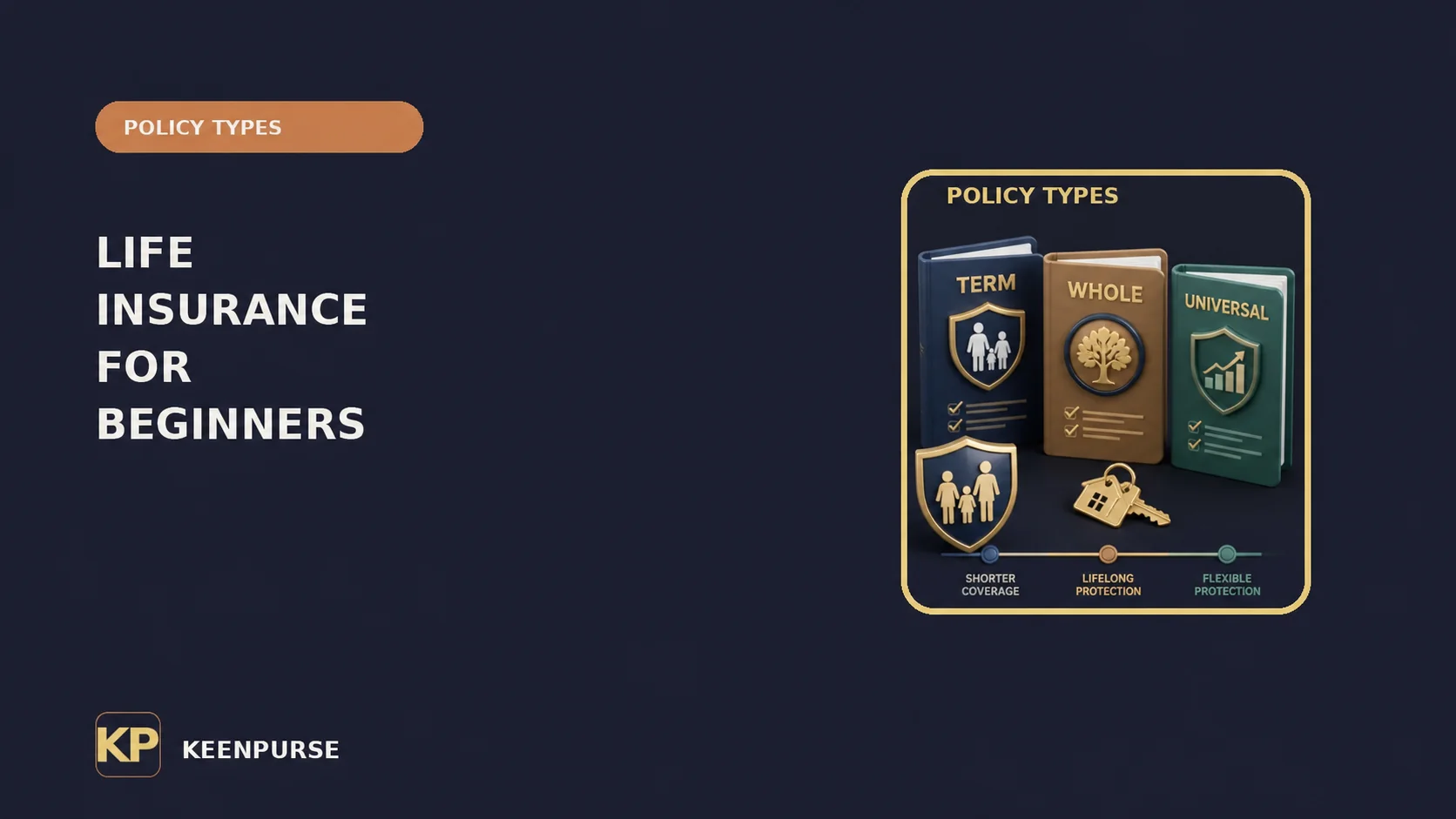
TL;DR
Life insurance is a protection contract: a policyholder pays premiums to an insurer and, if the policy is in force and its terms are met, it can provide a death benefit to named beneficiaries, US). Terminology, rights, and contract conditions vary by policy and jurisdiction, so class-level descriptions below are not a substitute for a specific contract.
For beginners, the useful starting point is not a premium chart or a “best” product list. It is a needs conversation: who would be financially affected by your death, what obligations could remain, and for how long? Term, whole, and universal life are broad policy classes—not interchangeable savings products or universal answers.
Life insurance for beginners is best approached as a needs conversation, not a products quiz.
Key Takeaways
- A life policy involves an insurer, a policyholder, an insured person where relevant, premiums, beneficiaries, and a death benefit under the contract’s terms. A state regulator describes it as a contract between a policyholder and an insurer that promises to pay the policyholder’s beneficiaries when the insured dies ([WA-OIC], US).
- Term life insurance is commonly described as a temporary-coverage class; whole and universal life are commonly described as permanent-policy classes. Product wording and availability require verification against the specific policy and jurisdiction.
- Cash value is a policy feature in certain permanent-policy classes, not the same thing as an ordinary savings account, [WA-CV]).
- Existing employer group life coverage can be one planning input, but eligibility, amount, portability, beneficiaries, and terms depend on the specific plan; record the plan documents rather than assuming coverage.
- A no-dependents situation is still a prompt for review, not an automatic yes-or-no answer about coverage.
How life insurance works
At its simplest, life insurance for beginners is easier to understand as a contract than as a financial scorecard. One party applies for and owns a policy in many arrangements; an insurer is the contract counterparty; another person may be the insured. The policy names one or more beneficiaries. The policyholder pays premiums according to the policy’s terms. If the insured person dies while the policy is in force, the contract may provide a death benefit to the named beneficiary or beneficiaries, subject to those terms, [WA-OIC]).
That sequence leaves several details deliberately unanswered. Arrangements differ by policy and jurisdiction. This article also does not address claims timing, tax, inheritance, probate, estate treatment, loans, or payout guarantees.
That is why life insurance for beginners rests on the actual policy document.
A quick distinction avoids a common mix-up: life insurance is not deposit insurance. Deposit-insurance protection concerns eligible deposits at covered institutions, not a life policy’s death-benefit arrangement. Build cash reserves separately from insurance decisions with the emergency-fund guide.
Term vs. whole vs. universal life insurance
The labels below are class-level descriptions from insurance regulators, not a substitute for policy documents. Insurers can use different features, names, conditions, and disclosures across countries and products, and class descriptions vary by jurisdiction.
Life insurance for beginners centers on policy classes, not provider promises.
| Policy class | Broad duration or structure | Cash-value feature | Question to explore | Source and verification boundary |
|---|---|---|---|---|
| Term life insurance | A policy purchased for a defined period (a term); benefits are payable to named beneficiaries if the insured dies during that term. | Do not assume a cash-value feature from the class name; term insurance generally does not build cash values. | Is the protection need tied to a limited period? | Read the policy’s exact term, renewal, conversion, and end-of-term wording. |
| Whole life insurance | Whole, universal, and variable life are types of cash-value (permanent-coverage) policies; whole life “provides coverage for your entire life” ([WA-CV]). | Commonly associated with cash value, subject to policy terms, [WA-CV]). | What protection and policy features are actually being compared? | Do not infer dividends, loans, surrender value, or performance without the specific contract. |
| Universal life insurance | A permanent, flexible-premium class described by a regulator as “flexible premium adjustable life insurance” ([WA-CV]). | May include cash-value features under policy terms. | Which terms control funding, coverage, and changes? | Verify all premium-flexibility, cost, lapse, loan, and benefit provisions in writing. |
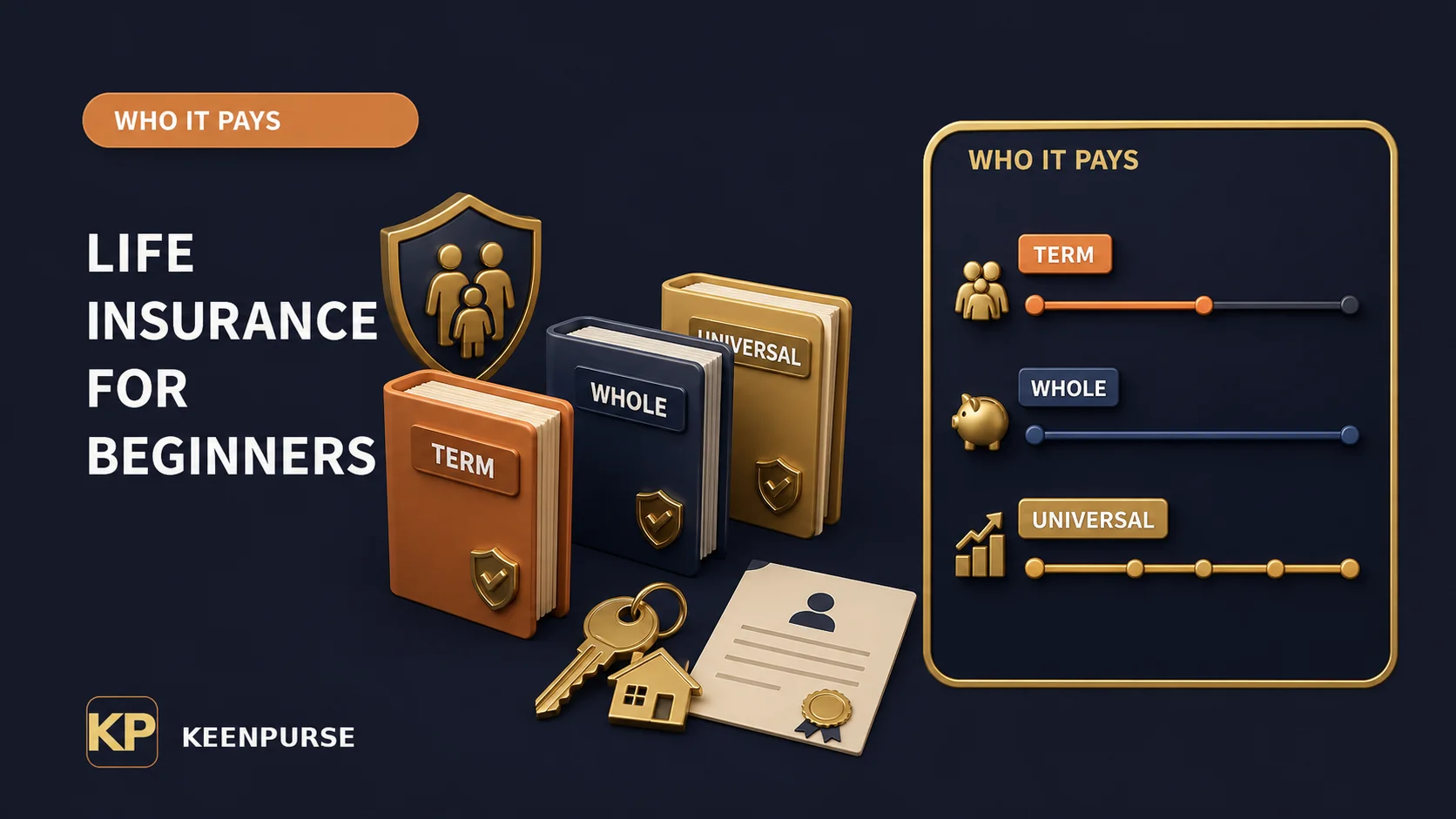
“Permanent” does not mean “simple,” and “cash value” does not mean “savings account.” An ordinary savings account and an insurance policy can have different purposes, protections, access rules, charges, and legal treatment, [WA-CV]). Comparing a feature label without reading the contract can conceal more than it reveals.
A useful beginner habit is to separate the class name from the specific policy promise. A class name can help you ask better questions, but it cannot tell you the benefit amount, the conditions that apply, the cost over time, or what happens after a missed payment; those are contract questions. A comparison that does not identify the version of the policy, jurisdiction, and date of the document is incomplete.
Separating the class name from the policy promise is a core life insurance for beginners skill.
For example, a reader who hears that a policy offers “flexibility” or cash value should ask what the current contract says, which features are guarantees rather than illustrations, and which consequences require tax or legal review.
This is not an argument for or against any policy class, but a way to avoid placing unrelated products on a single scorecard. A policy may be protection, a savings account accessible cash, and an investment account a long-term vehicle—having money does not make them substitutes.
For a clean next step, write down the policy class being discussed, then ask for the current policy document and the disclosure that explains the feature in plain language. A reader should be able to point to the exact wording rather than rely on a sales shorthand or a social-media comparison. Keep copies of the materials used for the comparison, including the date received.
Writing down the class and the document is a clean life insurance for beginners next step.
Class descriptions differ by country; a UK reader should confirm wording against current guidance and the ombudsman.
What to consider before deciding whether coverage applies
A coverage amount cannot be responsibly produced from a salary multiple, an age rule, or a generic calculator in an educational article. Personal obligations, household arrangements, country rules, existing resources, and policy terms can all change the analysis.
A responsible life insurance for beginners note skips the salary-multiple short-cut.
Instead, use a short inventory. It helps turn a vague question—”How much life insurance do I need?”—into facts a qualified professional or policy document can address.
An inventory turns life insurance for beginners from vague into fact-based.
| Planning prompt | What to write down | Why it matters | Boundary |
|---|---|---|---|
| People who depend on you | Income, unpaid care, shared household work, or other contributions they rely on | It identifies who could face a financial gap | It does not decide that coverage is suitable. |
| Shared debts or obligations | Which obligations exist, whose name is on them, and what the agreement says | Responsibility may not match an informal assumption | Legal liability and estate treatment require jurisdiction-specific verification. |
| Existing employer coverage | Plan name, beneficiary form, stated amount, and current plan documents | It prevents treating a workplace benefit as a blank space | Eligibility, portability, and terms must be verified with the plan. |
| Time period | The period during which another person could be affected | It separates a temporary need from a permanent one | It is not a recommendation for a policy class. |
| No dependents | Any final expenses, shared commitments, or people who could be affected | It makes the question more specific than “I have no children” | It does not create a coverage prescription. |
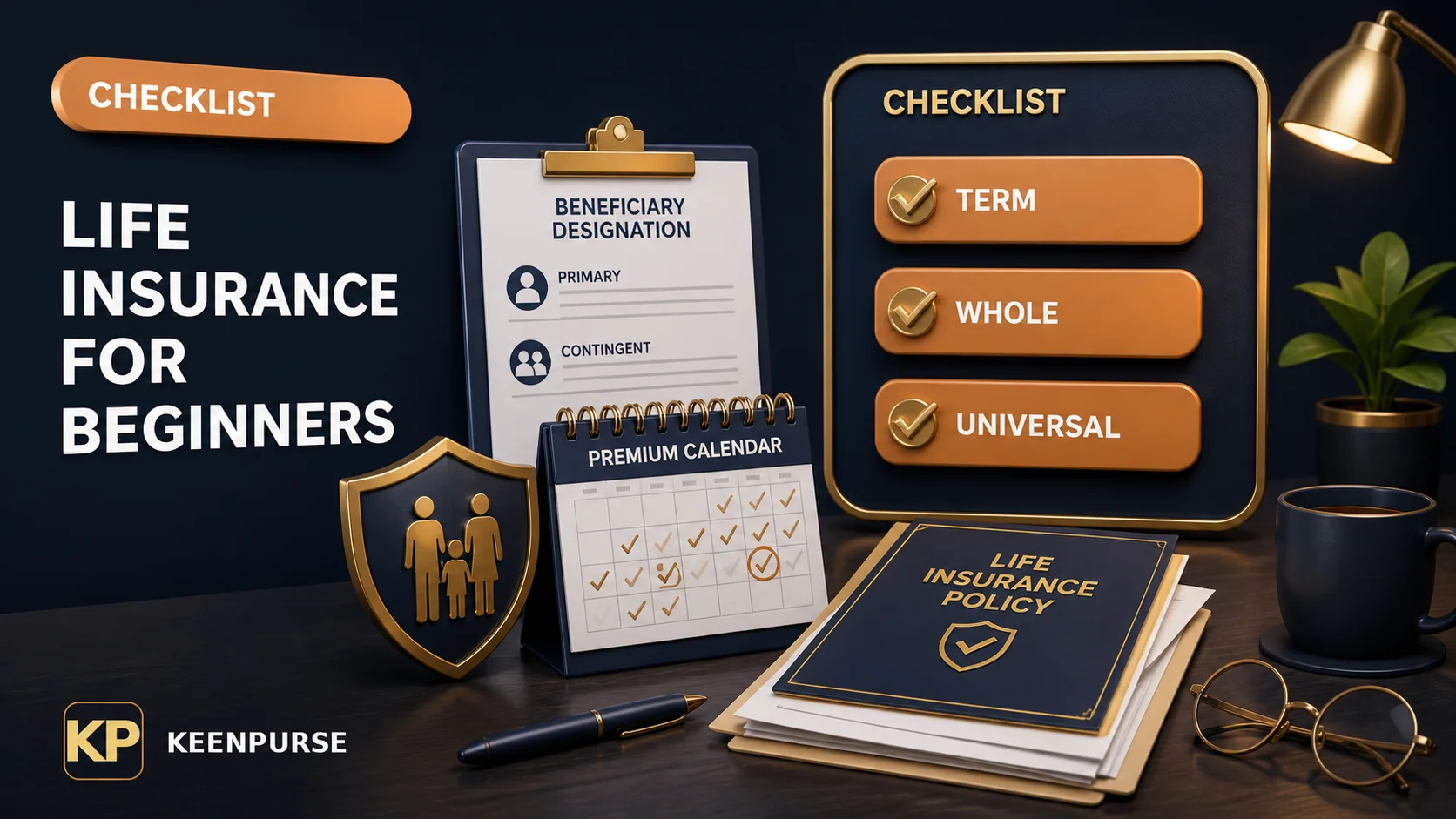
An illustrative example: Jordan shares rent with a partner, contributes to household bills, and has an employer plan. Jordan’s worksheet would record the actual lease and plan documents, who could be affected, and the period those commitments exist. It would not convert those facts into a universal dollar target. This is an illustration, not a typical household or coverage calculation.
The worksheet can also expose information that is missing. Perhaps a beneficiary designation has not been reviewed, an employer benefit is mentioned only in a pay portal, or a shared obligation is understood informally but not documented. None of those gaps tells Jordan what to buy. They do show why a decision should not rest on a headline number from a generic online article. Beneficiary processes and workplace-plan administration vary by provider and jurisdiction, so confirm each with the relevant document.
Keep the notes factual. Write “lease ends on this date” rather than “my partner would owe this amount,” unless the agreement supports that conclusion. Write “employer plan listed in benefits portal” rather than “coverage continues if I leave,” unless current plan materials say so. This prevents a planning list from becoming a string of untested assumptions.
The same approach applies when a household has assets or savings. A balance in an account does not, by itself, answer who owns it, whether it is accessible, or which obligation it can serve. Record it as one item for later review.
Finally, revisit the worksheet when a household event changes the underlying facts: a new shared obligation, a change in caregiving, a change in work benefits, or a move to another jurisdiction. Revisit does not mean change a policy; it means confirm that the facts and documents used in the discussion are still current.
Is life insurance worth it? Keep the question needs-based
“Is life insurance worth it?” can sound like a product-ranking question. For a beginner, it is more useful as a protection question: would another person face a financial problem if your income, care, or contribution stopped? If so, what is the documented problem, who bears it, and how long could it last?
Life insurance for beginners is more a protection question than a product ranking.
The answer can differ for people with dependents, shared obligations, employer benefits, or no dependents, and it changes as a household changes. A regulator’s guidance notes that each individual’s situation is different, so suitability depends on personal circumstances, product terms, and jurisdiction. A broad article should not declare that everyone should purchase a particular class, amount, or term.
Avoid framing whole life or universal life as a return contest with investing, or repeating “buy term and invest the difference” as a universal rule. Insurance protection and investing can raise different questions. The index funds vs. ETFs guide is a separate beginner guide to fund structures, not an insurance recommendation, and dollar-cost averaging is a separate contribution-method explainer, not a policy comparison.
Budget and planning boundaries
A premium is a recurring policy cost under the contract’s terms, not a reason to skip the rest of a household plan. If you are mapping known bills, a sinking-fund system can make irregular planned expenses visible without turning insurance into an investment category.
A premium is a real cost, so life insurance for beginners should see it plainly.
If a household is reviewing insurance costs already on its budget, use the dedicated bills guide for its separate scope; it does not explain life-policy classes. Do not assume frequency, grace periods, cancellation consequences, or price changes; those are policy-specific and must come from the contract.
The 50/30/20 budget rule can also be a broad budgeting lens, but it cannot determine whether a policy fits your needs. A household goal such as a home purchase is a planning context, not an insurance input.
A practical document check
Before making a comparison, collect the information that exists rather than trying to remember it. That can include the current policy summary or contract, a beneficiary record where available, an employer-plan document, and notes on obligations that others could inherit or need to manage. Documents and their legal effect vary by provider and jurisdiction, so treat each item as a question for the relevant document.
Then write questions in plain language. “Who is covered?” “Who is named?” “What must be paid, and under which terms?” “What changes when this policy reaches a stated date?” “Which statement is written in the contract, and which is only an explanation?” These questions do not require a reader to choose a policy. They make it easier to recognize when a statement is too broad to rely on.
If a document conflicts with a verbal explanation, the conflict is a reason to seek clarification from the insurer or a qualified professional before acting. This is especially important when a reader is considering changing a beneficiary, cancelling coverage, relying on employer benefits, or comparing a policy feature with another financial product. The article cannot interpret a reader’s documents or state which action is appropriate; an insurance ombudsman can help with a dispute about an existing policy in the relevant jurisdiction.
International terminology and exclusions
In the UK and some other contexts, readers may encounter the phrase life assurance. Whether a label is used alongside or instead of life insurance, and what features attach to it, depends on local regulation, policy design, and consumer protections—so it should not be assumed from the label alone. For UK readers, insurance complaints and disputes are handled by the Financial Ombudsman Service, the statutory ombudsman.
This guide intentionally omits tax treatment, inheritance, estate, probate, claims processes, exclusions, conversion, renewal, surrender values, loans, dividends, and insurer comparisons. Each needs a relevant, dated source and jurisdictional context,.
Frequently Asked Questions
What is life insurance and how does it work?
It is a protection contract in which premiums are paid to an insurer and a death benefit may be payable to named beneficiaries if the policy is in force and its terms are met, [WA-OIC]). Roles, conditions, and beneficiary rights are contract- and jurisdiction-specific.
What is the difference between term and whole life insurance?
At a broad level, term life is commonly described as temporary coverage for a defined term, while whole life is commonly described as a permanent-policy class with a cash-value feature, [WA-CV]). Exact features, duration, renewal, and costs depend on the policy.
Life insurance for beginners ends where the policy terms and the local rules begin.
Is life insurance worth it if nobody depends on me?
No dependents does not create a universal answer. Use it as a prompt to document shared commitments, people affected by your contribution, existing arrangements, and the relevant time period. A personal suitability decision needs facts beyond this article.
How much life insurance do I need?
This article does not provide a coverage amount, salary multiple, or calculator result. Start by documenting people affected, obligations, existing workplace coverage, and time periods, then verify relevant policy and professional guidance for your situation.
Is life assurance the same as life insurance?
“Life assurance” is a term readers may encounter, especially in UK contexts. Its precise use and the policy features attached to it must be checked against local regulation and the actual contract, because terminology and consumer protections are not uniform.
Is cash value the same as a savings account?
No. Cash value is a policy feature that operates under insurance-contract terms; a savings account is a different financial product. Do not assume access, value, protections, tax treatment, or outcomes are alike, [WA-CV]).
Sources
- National Association of Insurance Commissioners, “Life Insurance & Annuities” consumer resource (US). Accessed 16 August 2026. https://content.naic.org/consumer/life-insurance.htm — Supports: policies pay money to named beneficiaries; the two basic classes are term and permanent insurance; whole/universal/variable are cash-value policies; cash value lets owners access money while living; individual situations differ.
- [WA-OIC] Washington State Office of the Insurance Commissioner, “Life insurance” (US state regulator). Accessed 16 August 2026. https://www.insurance.wa.gov/insurance-resources/life-insurance — Supports: “Life insurance is a contract between a policyholder and an insurer. It promises to pay the policyholder’s beneficiaries a sum of money when they die.”
- [WA-CV] Washington State Office of the Insurance Commissioner, “Types of cash value life insurance” (US state regulator). Accessed 16 August 2026. https://www.insurance.wa.gov/insurance-resources/life-insurance/types-cash-value-life-insurance — Supports: whole life “provides coverage for your entire life”; universal life is a flexible-premium permanent class; cash value and variable life are permanent classes.
- Financial Ombudsman Service, insurance complaints guidance (UK statutory ombudsman). Accessed 16 August 2026. https://www.financial-ombudsman.org.uk/consumers/complaints-can-help/insurance — Supports: the UK ombudsman handles consumer complaints about a range of insurance products, and that insurance terms and consumer protections are jurisdiction-specific.